

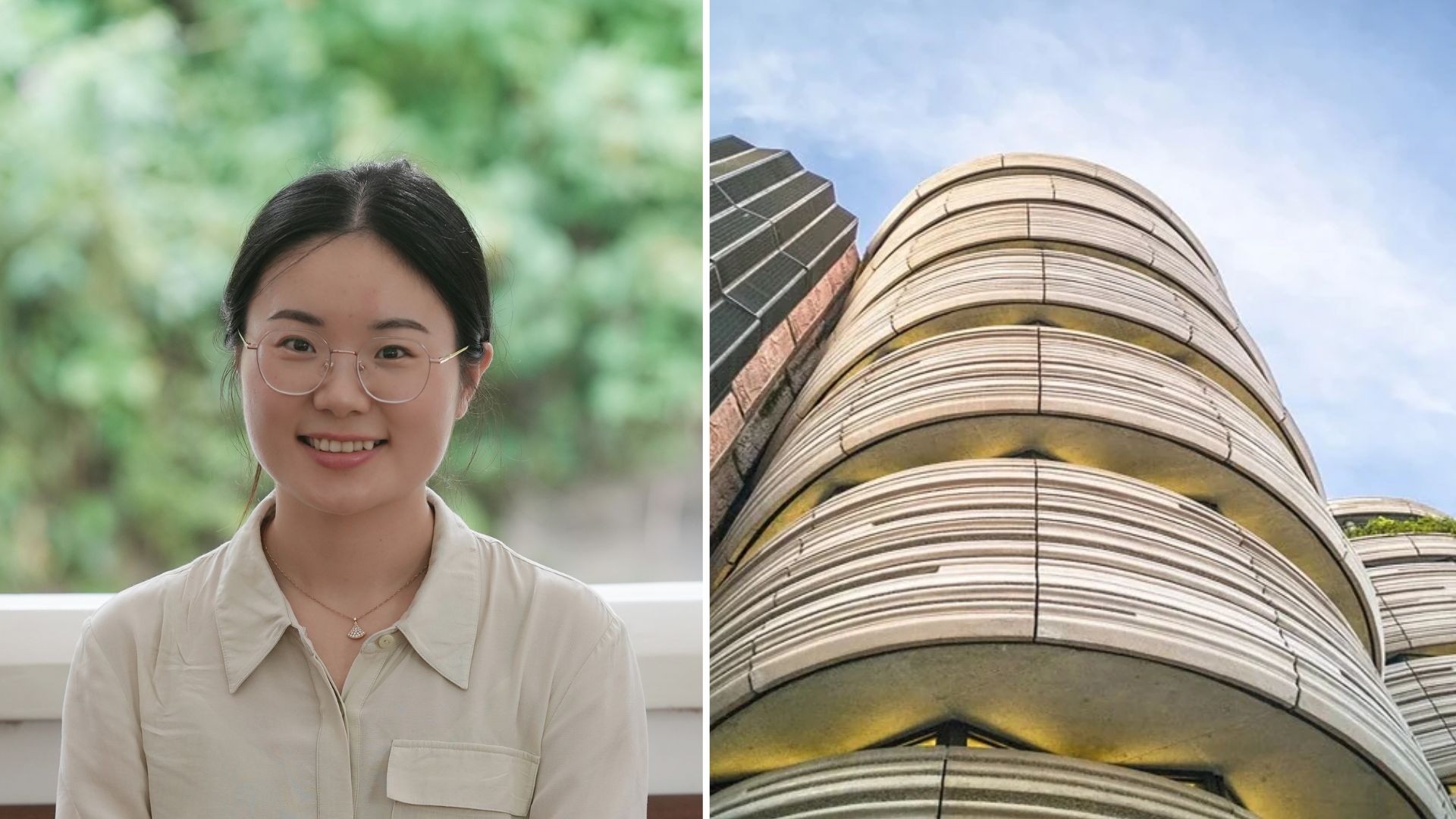
Why pursue one postdoc at two places? For Xu Guo, Wallenberg-NTU Presidential Postdoctoral Fellowship alumna since February 2025, it meant, among other things, broadening her research perspective and become more adaptable and open-minded towards different cultures and lifestyles.
What motivated you to apply for the WASP-NTU PPF?
After completing my PhD, I wanted to take the next step towards becoming an independent researcher and explore new research directions beyond my doctoral work. The Wallenberg-NTU Presidential Postdoctoral Fellowship offered both the freedom to develop my own research ideas and the unique opportunity to work smoothly in two leading research environments in Singapore and Sweden. I was particularly attracted by the chance to learn from different research perspectives, build international collaborations, and grow towards my long-term goal of an academic career.
Why do you think a postdoctoral position is a valuable next step after a PhD?
I see a postdoc as a valuable transition period that offers the flexibility to explore different research interests while developing the skills needed for an academic career. It offers the freedom to explore ambitious questions without necessarily focusing on immediate practical outcomes, while still benefiting from the guidance and support of experienced researchers. For those considering an academic career, it is also a valuable period to establish an independent research direction and build a strong research track record.
What do you think you gain from spending your postdoc between two countries and research environments, rather than staying at one university?
One of the greatest benefits is the opportunity to approach research from different perspectives. At NTU, working with Prof. Chunyan Miao, I explored how AI can address real-world challenges in ageing. At KTH, working with Prof. Mikael Skoglund, I had the freedom to pursue research at my own pace and explore more theoretical perspectives on how large language models reason. These complementary experiences helped me connect practical challenges with fundamental research questions and build collaborations across different research communities.
What has spending time in both Sweden and Singapore given you, professionally and personally?
Professionally, working with researchers from different backgrounds has broadened my research perspectives and encouraged me to think more independently about my research direction. It has also helped me develop stronger communication skills by learning to explain my research to people with different expertise.
Personally, living in both Singapore and Sweden has exposed me to different cultures and lifestyles, making me more adaptable and open-minded. During my year in Sweden, I went from barely knowing how to cook to preparing a variety of delicious dishes, and I also discovered how much I enjoy travelling alone.
Do you have any tips for PhD students who are considering applying?
For the WASP-NTU Fellowship, I would encourage applicants to think carefully about how the two research environments could contribute differently to their research plans. Reach out to potential supervisors early, discuss your ideas openly, and develop a proposal that is both ambitious and realistic.
About Xu Guo
PhD: Xu Guo received her PhD from the School of Computer Science and Engineering at Nanyang Technological University (NTU), Singapore, under the supervision of Professor Han Yu.
Thesis: She defended her PhD thesis in May 2023. The thesis, titled Data-Efficient Domain Adaptation for Pretrained Language Models, focused on developing data-efficient methods for adapting language models to new domains and tasks.
Wallenberg-NTU PPF: Xu Guo began her Wallenberg-NTU Presidential Postdoctoral Fellowship in September 2023. She spent the first half of the fellowship at NTU, working with Professor Chunyan Miao, and the second half at KTH Royal Institute of Technology in Sweden, working with Professor Mikael Skoglund from February 2025.
Research field: Her research focuses on natural language processing, generative AI, and large language models, particularly efficient learning and reasoning under resource constraints. She also investigate evidence-grounded reasoning and multilingual AI safety to improve the trustworthiness of AI systems. Beyond methodological advances, Xu Guo is interested in applying these technologies to socially meaningful challenges.
Read more and apply
Published: November 23rd, 2026
[addtoany]