

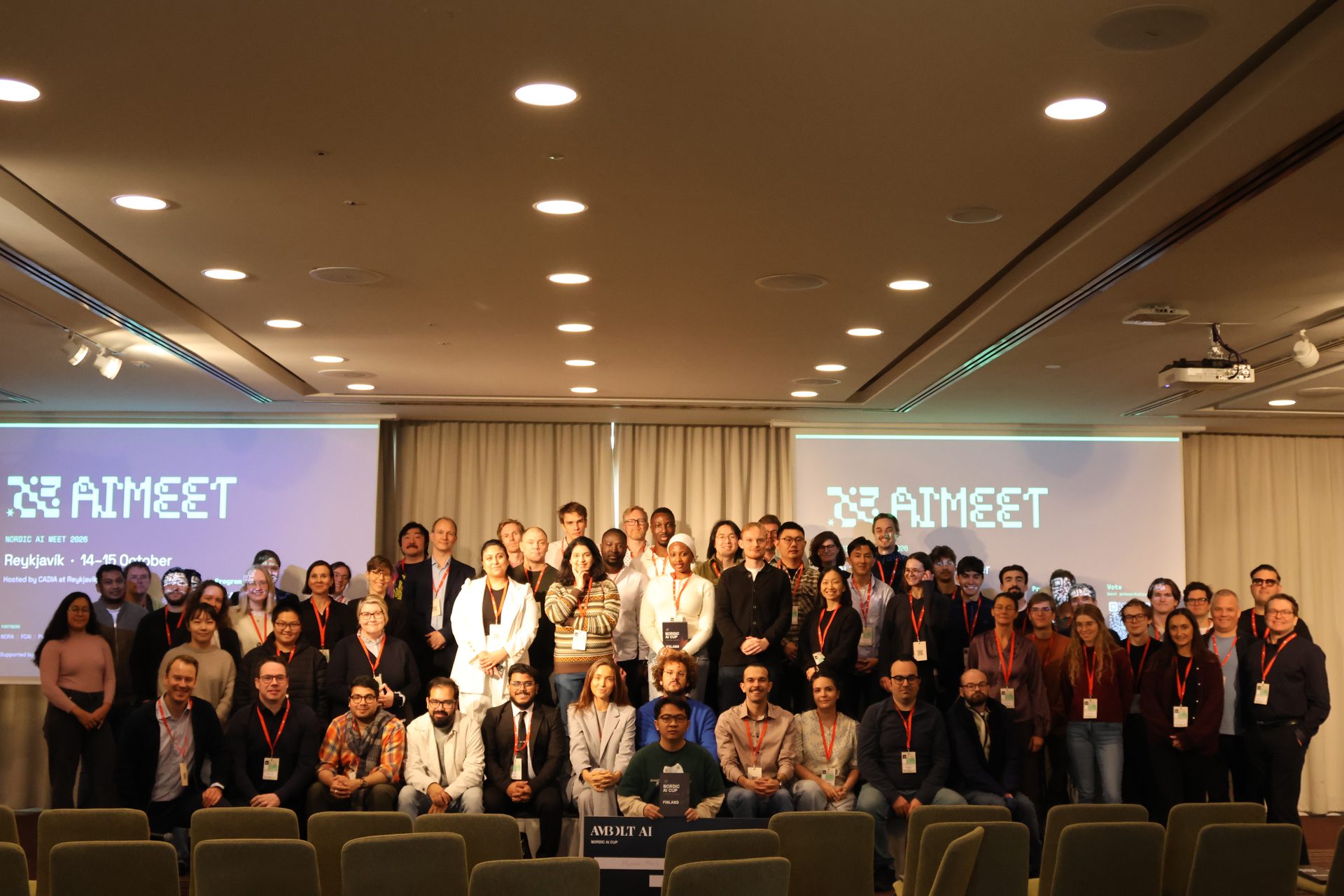
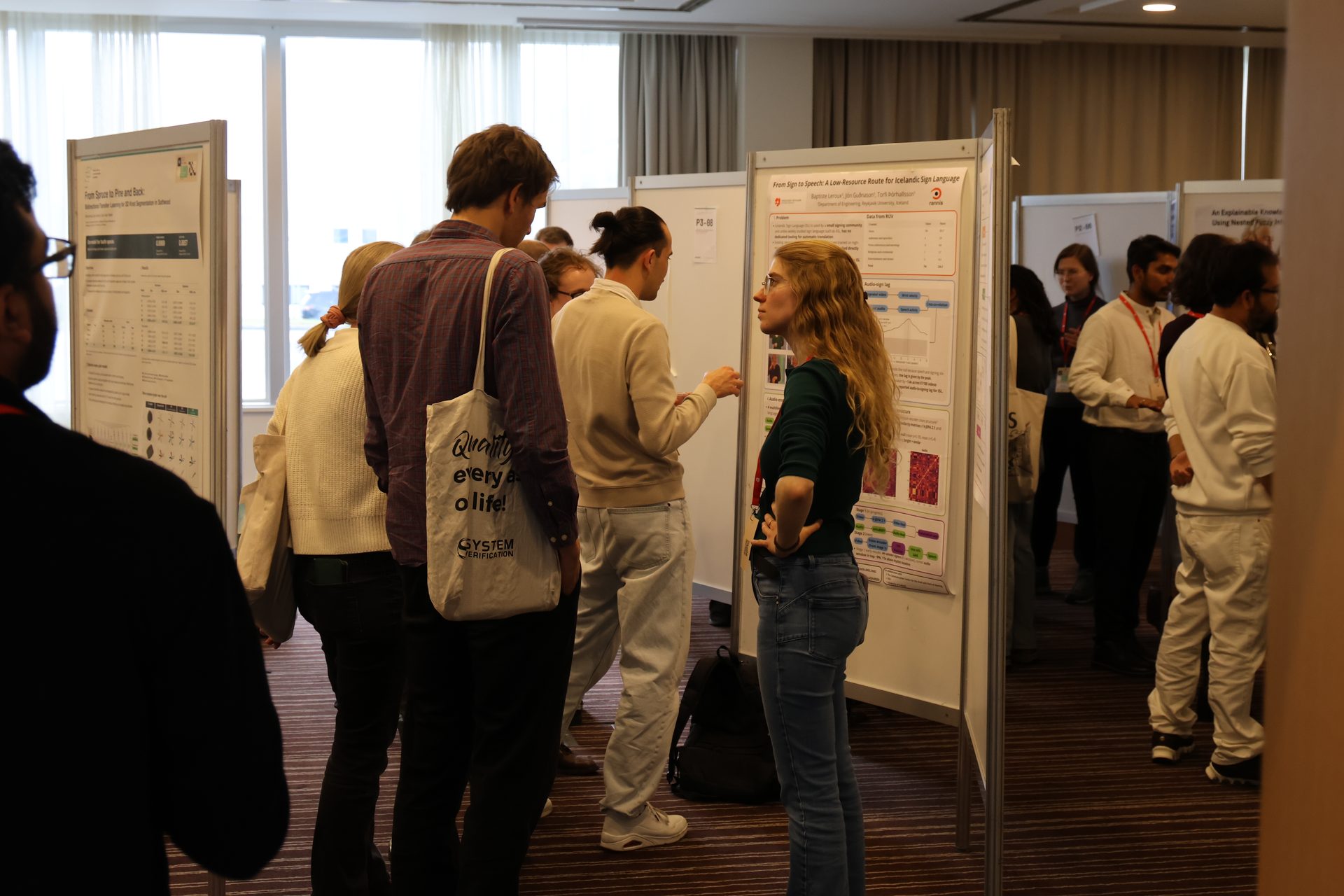
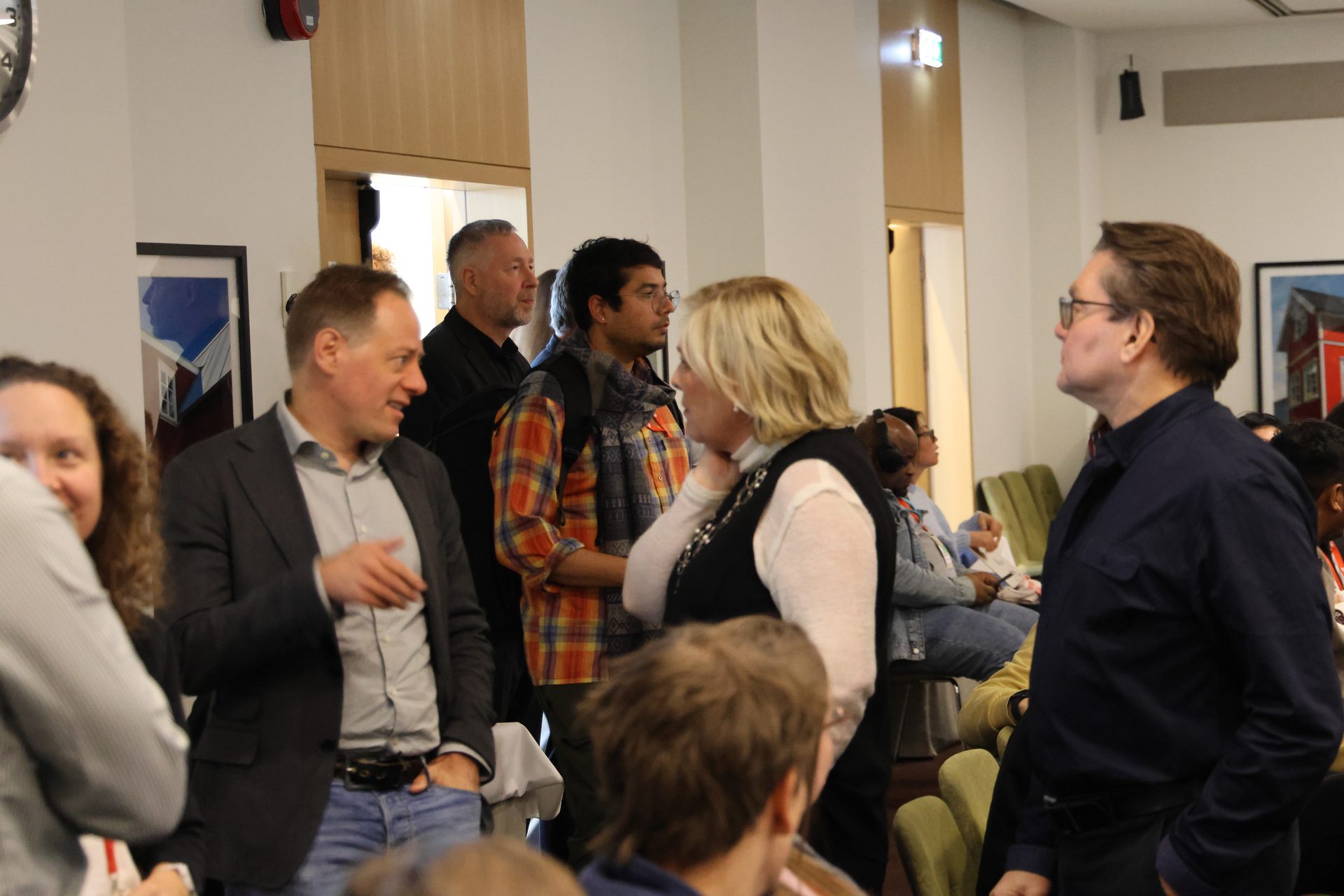
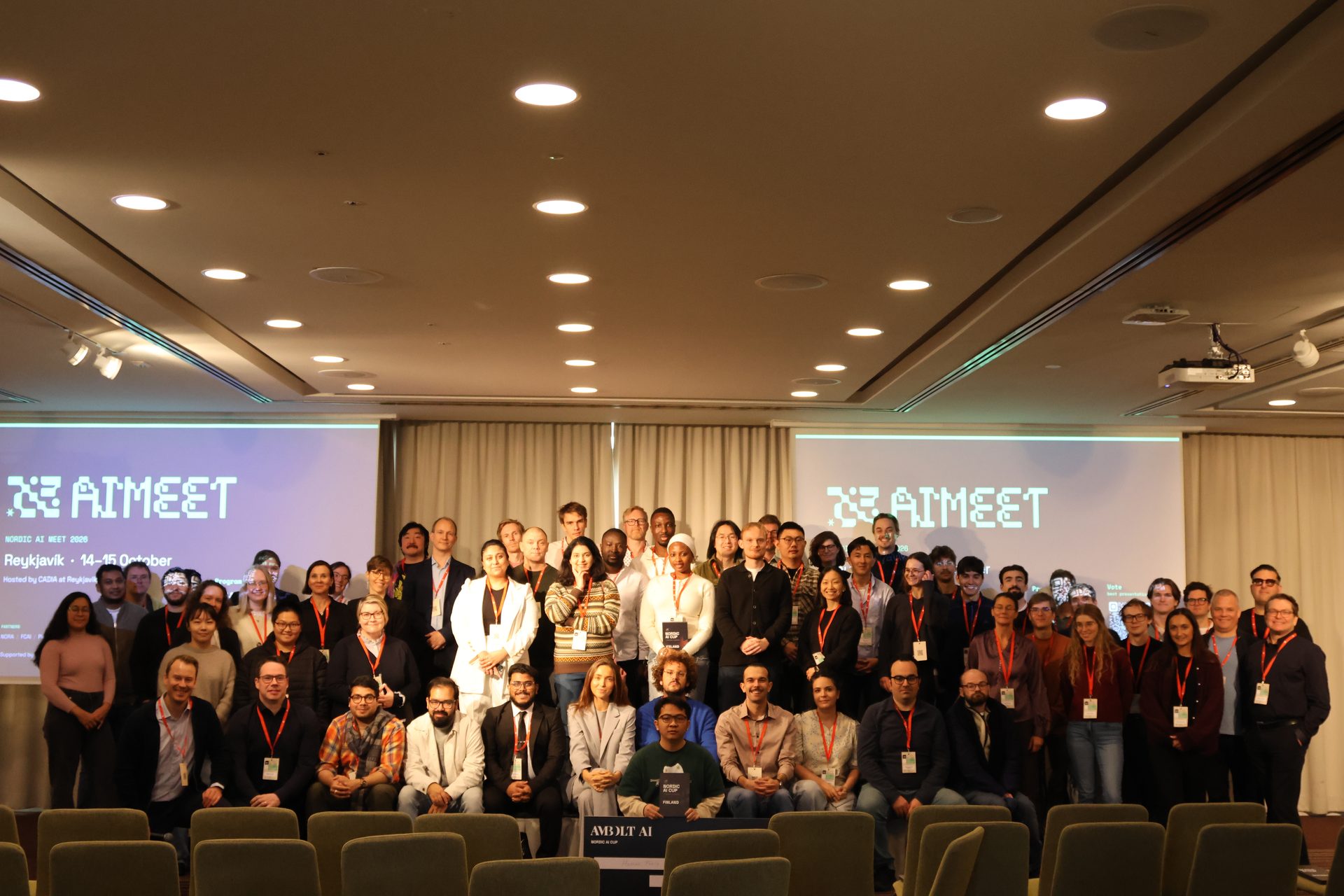
Roughly 100 researchers from all the Nordic countries participated in the Nordic AI Meet in mid-October. This year, the annual meeting took place on Iceland, hosted by CADIA (Center for Analysis and Design of Intelligent Agents) at Reykjavik University.
Keynote talks, a fireside chat with the president of Iceland, an industry talk, oral session talks, poster presentations and the final of the very first Nordic AI Cup concluded the meeting.
With that, the Nordic AI Meet now has toured all the Nordic countries since it started in Norway in 2021. The meeting will return to Norway in 2027.
Social sciences, Nordic AI Cup and a visit from the President
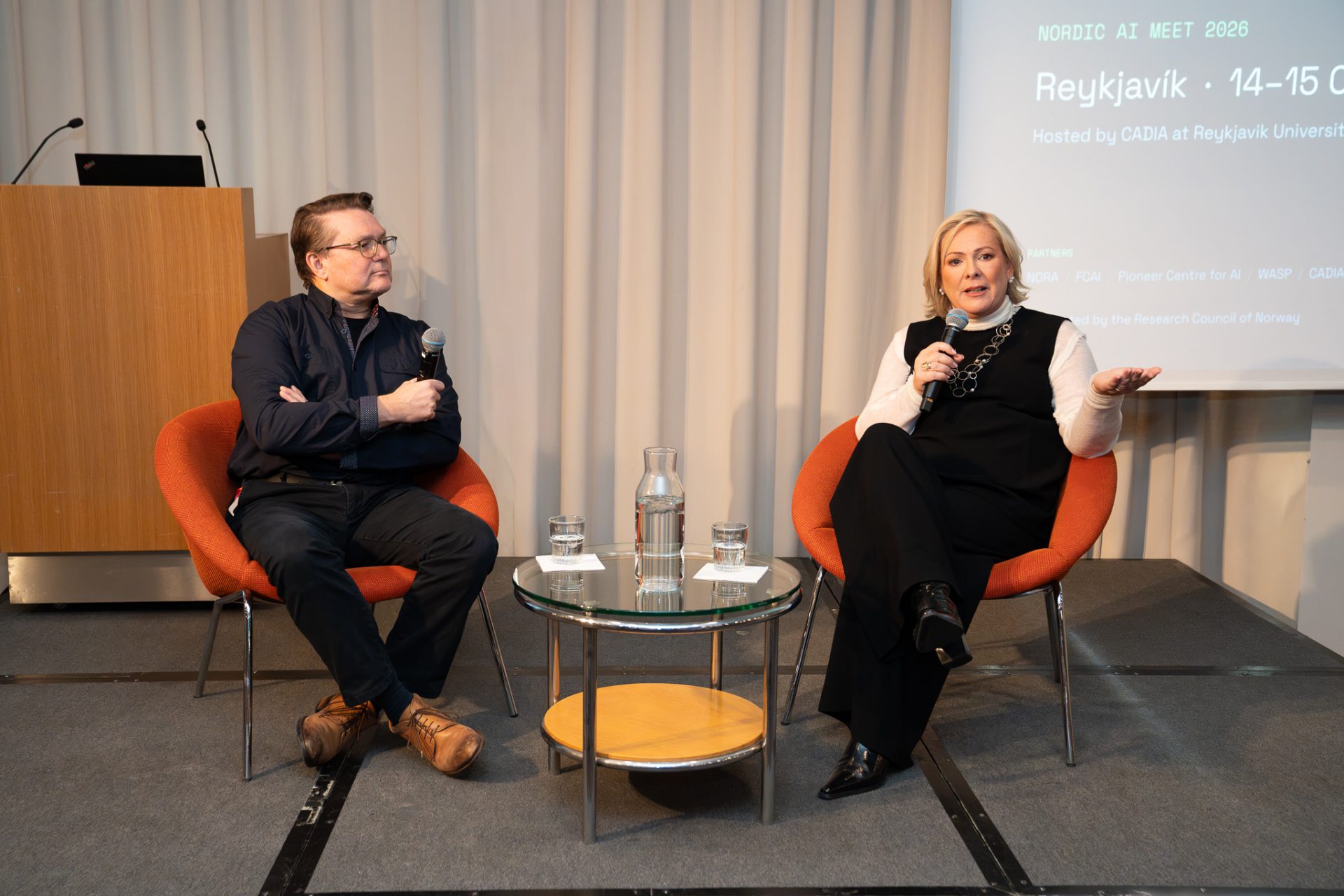
The Icelandic president Halla Tómasdóttir participated in a fireside chat with Kristinn R. Thórisson, AI researcher and co-founder of Iceland’s CADIA. Professor Thórisson and President Tómasdóttir discussed how we can use AI for good in the Nordics. The president said that she feels a sense of urgency for the Nordics to act and collaborate on AI safety.
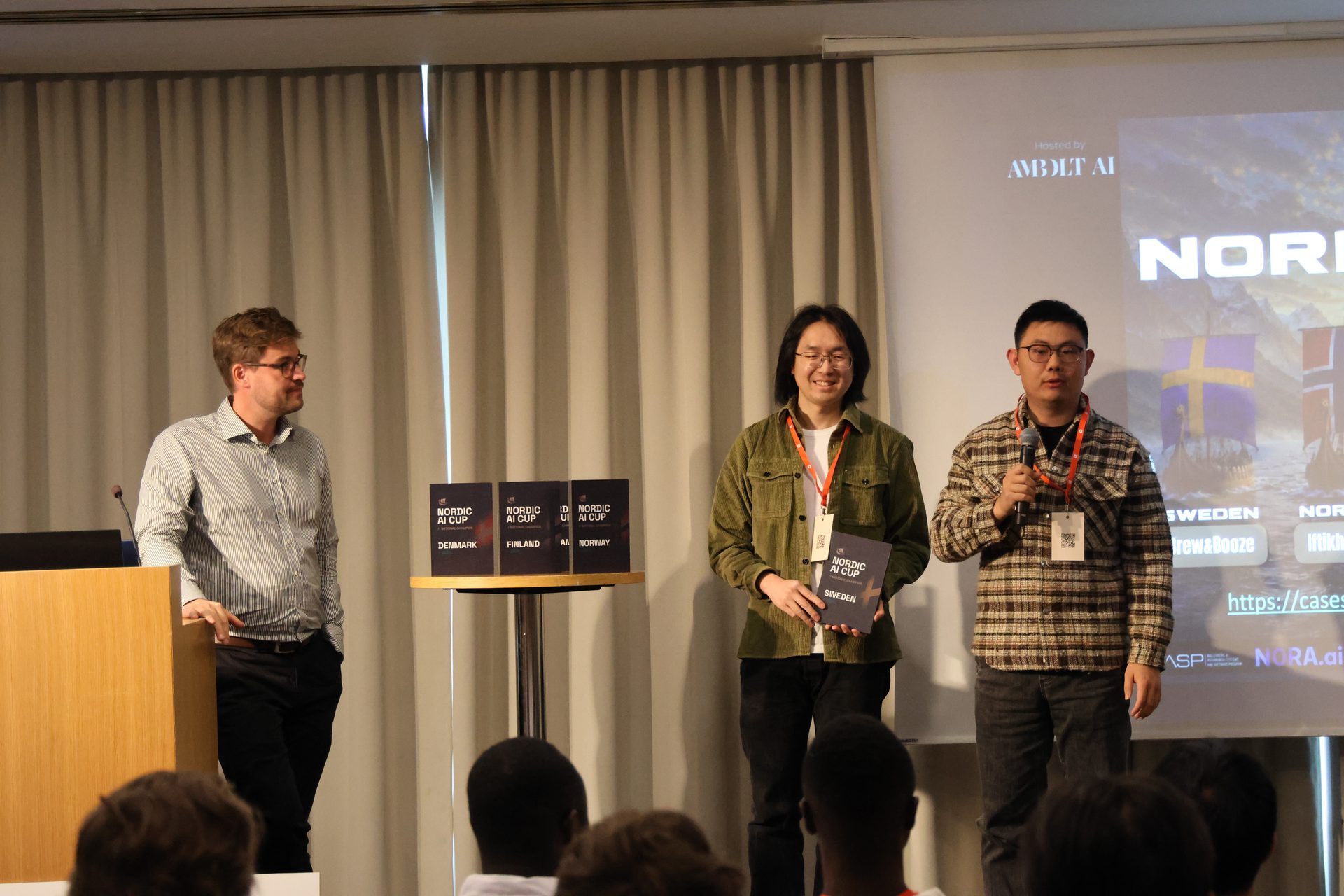
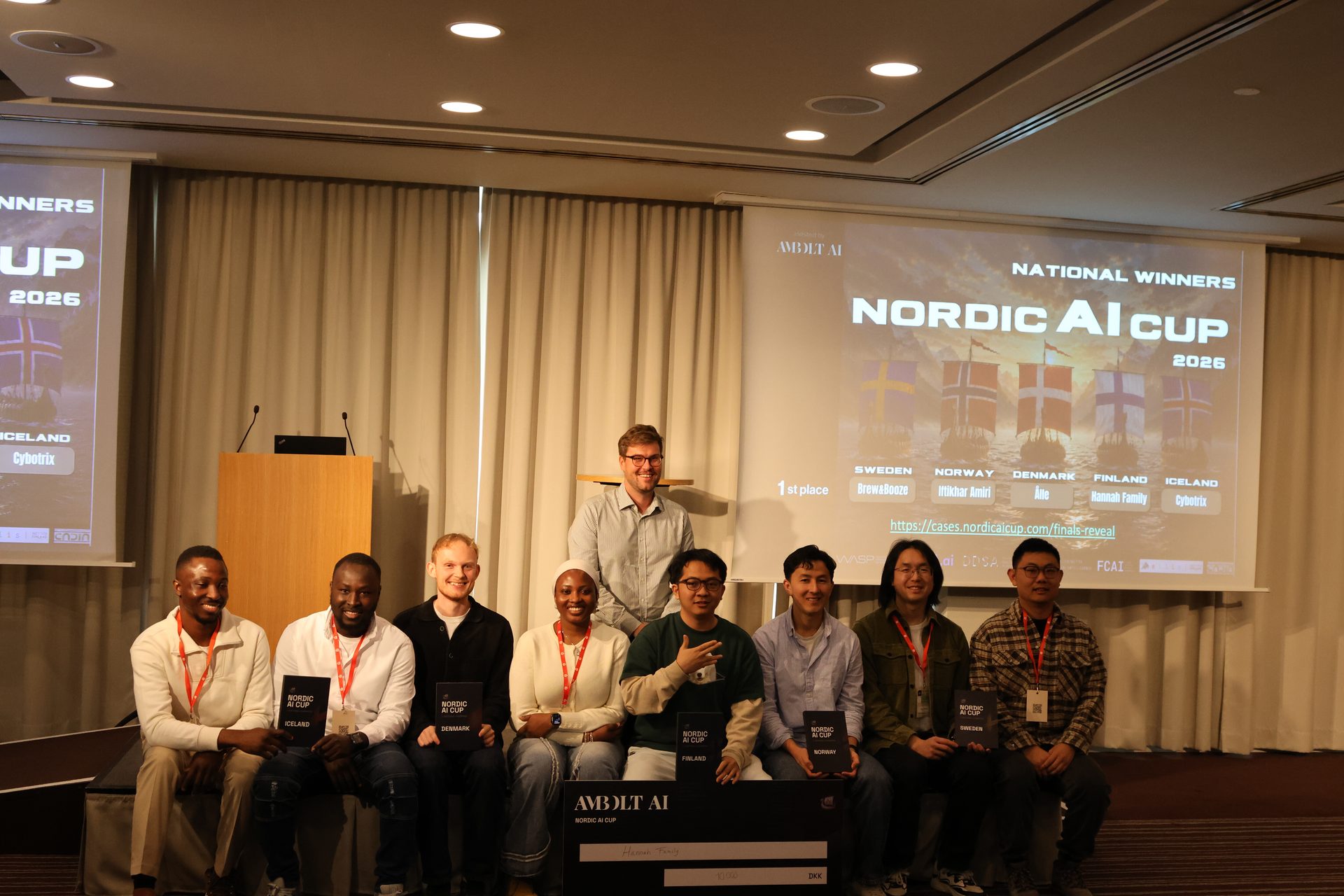
This year saw the first Nordic AI Cup final. Winning teams from national qualification rounds in Norway, Sweden, Denmark, Finland and Iceland gathered in Reykjavík for an intense 24-hour competition.
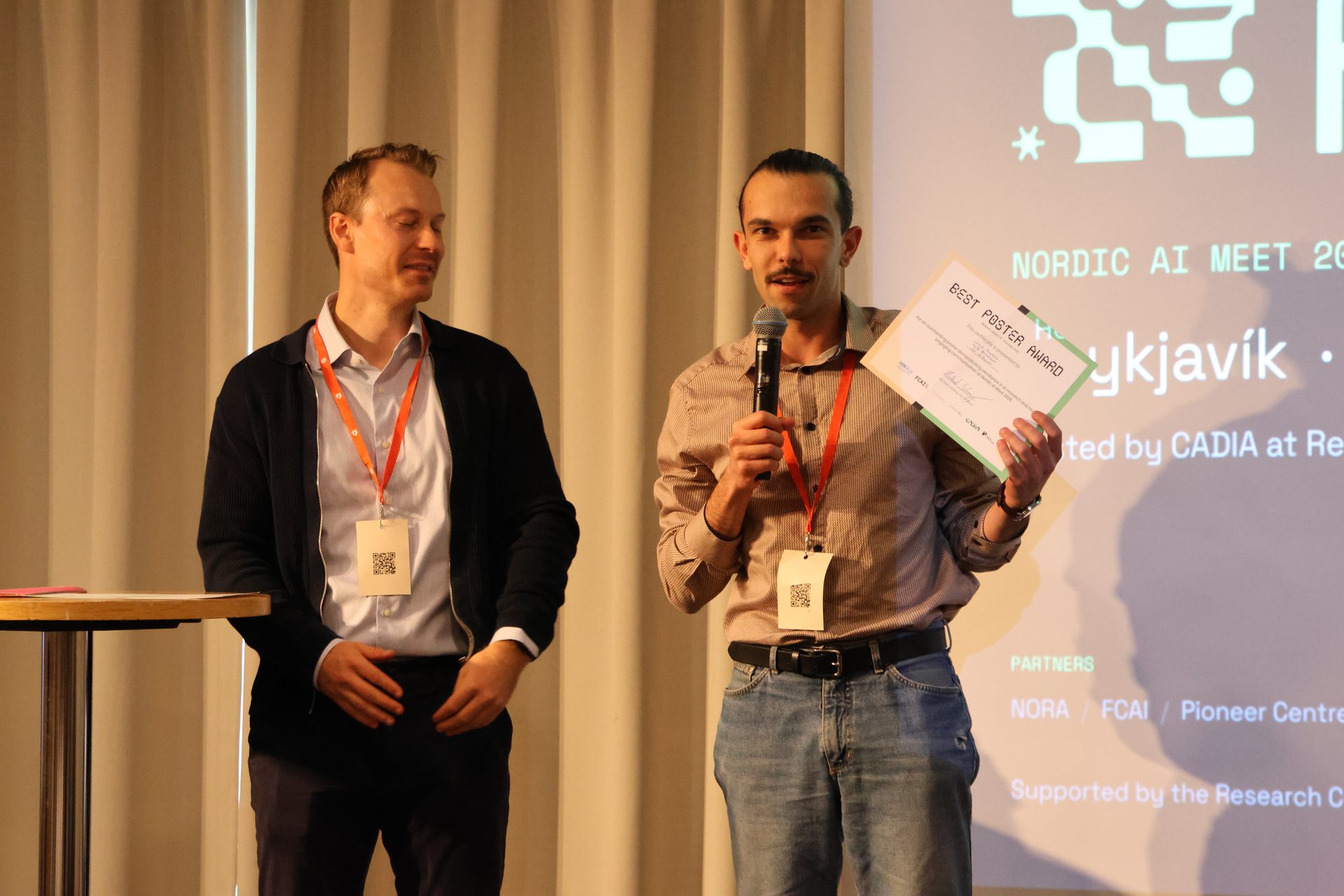
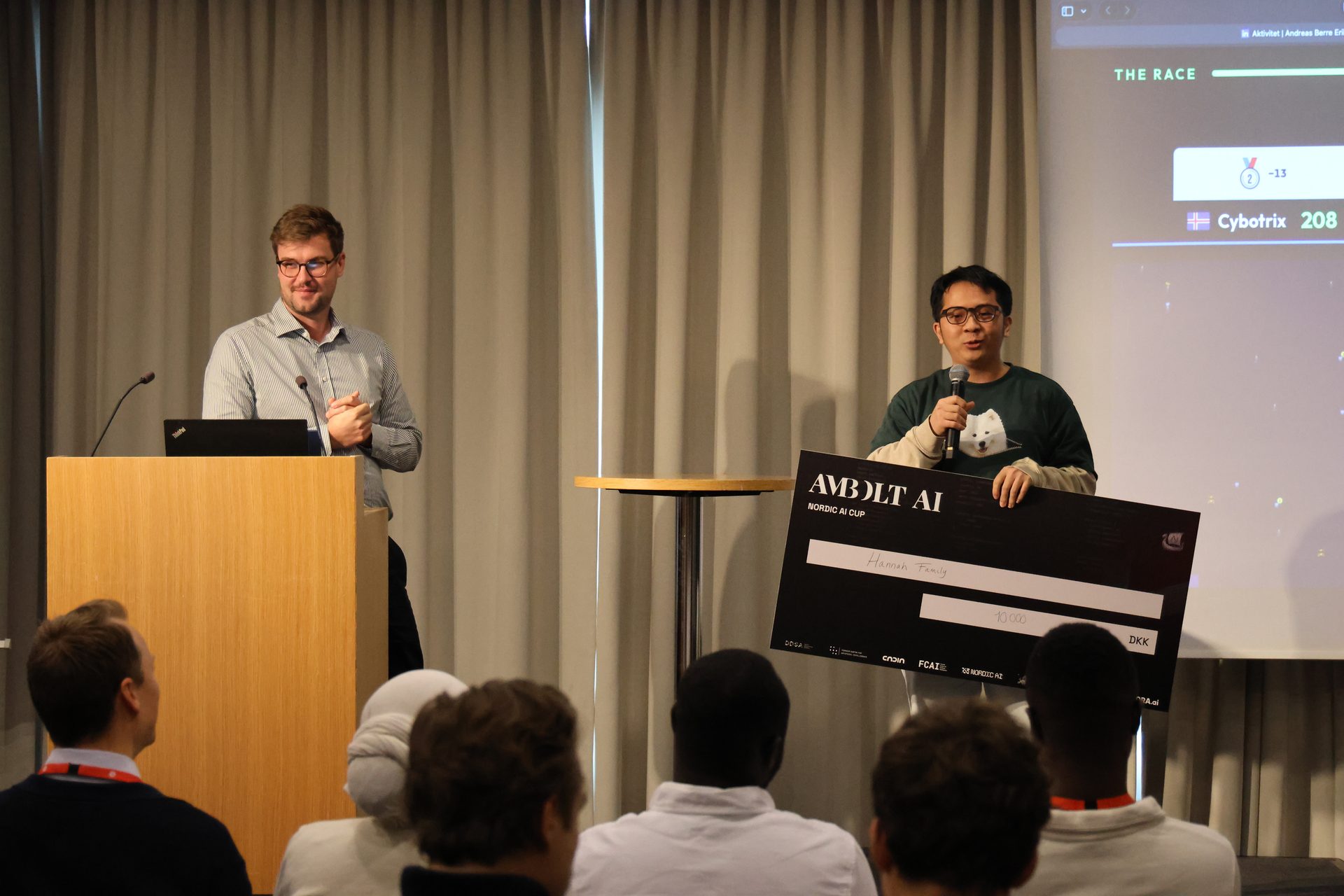
The AI Cup was not so much about crowning a winner as about bringing young AI talents from across the Nordics together in a friendly competition. Congratulations to the Finnish team of one – Hannah Family, or Yue Fang, a PhD student at Aalto University! Also, a big thank you to Ambolt AI for their great work in organising the Nordic AI Cup.
Thought-Provoking Keynotes
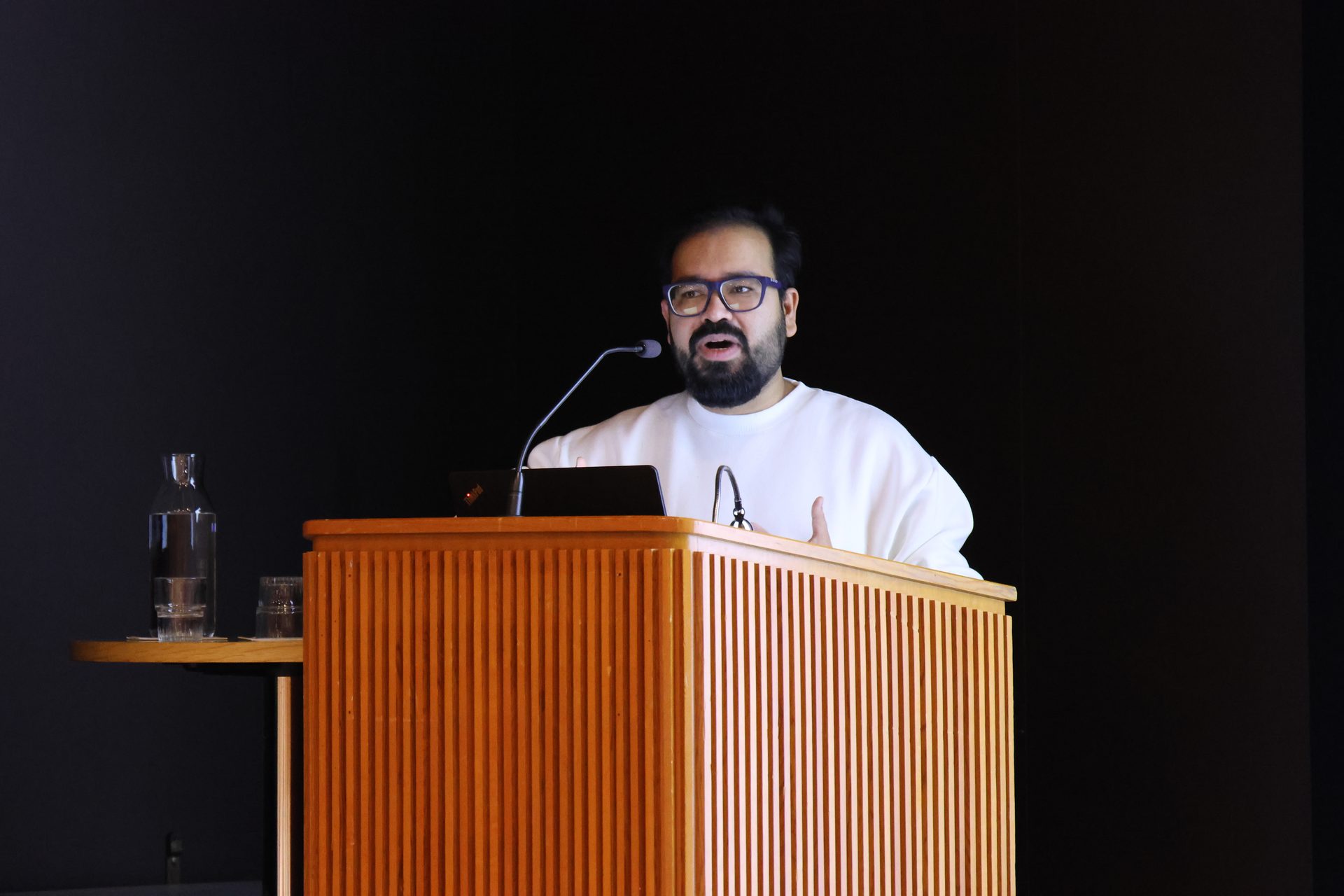
In the main programme, there were five keynotes and one industry talk:
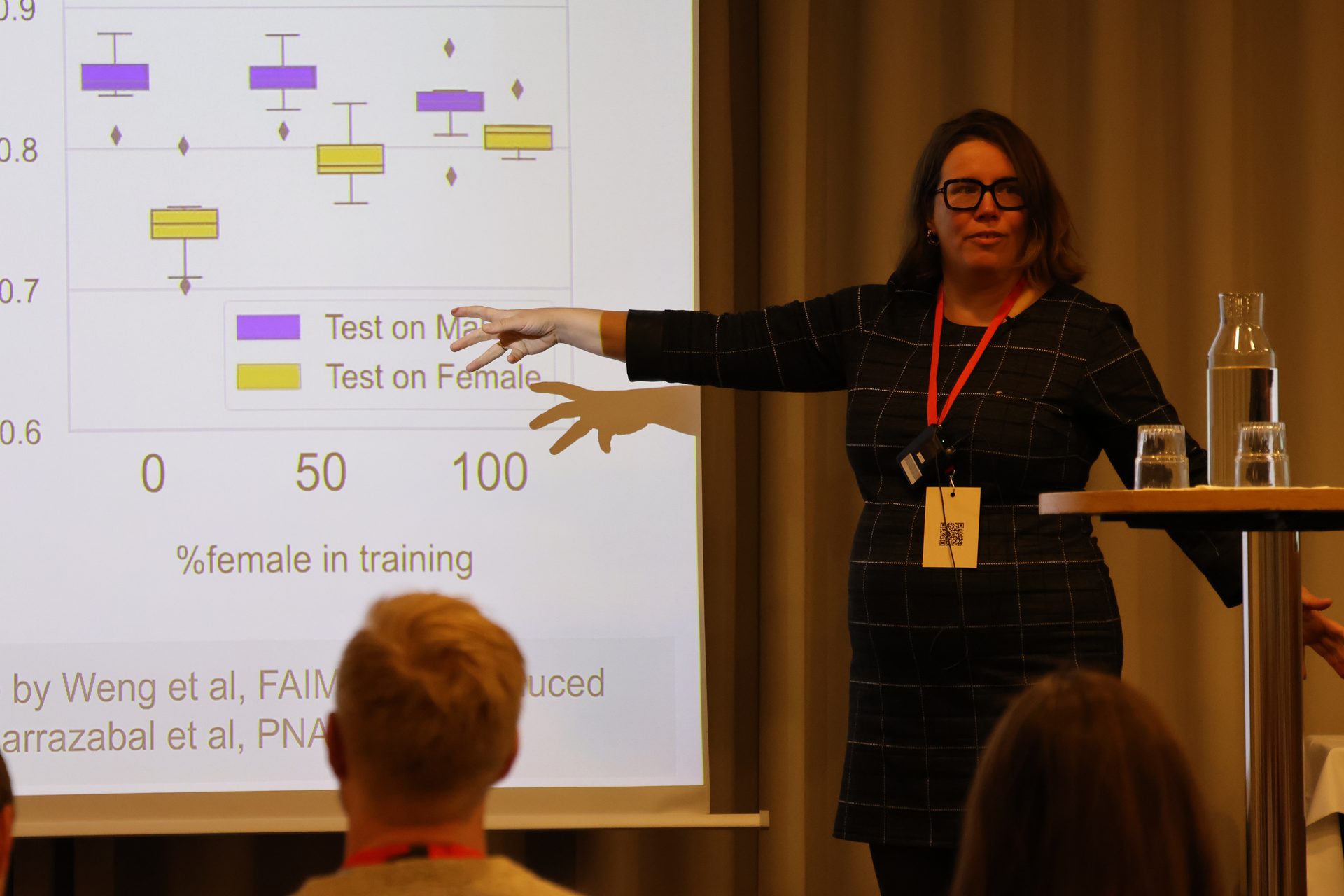
Focusing on the difficulties in dealing with biases in medical data, Aasa Feragen (Technical University of Denmark) gave a thought-provoking talk on whether it is responsible to do responsible AI in such irresponsible times.
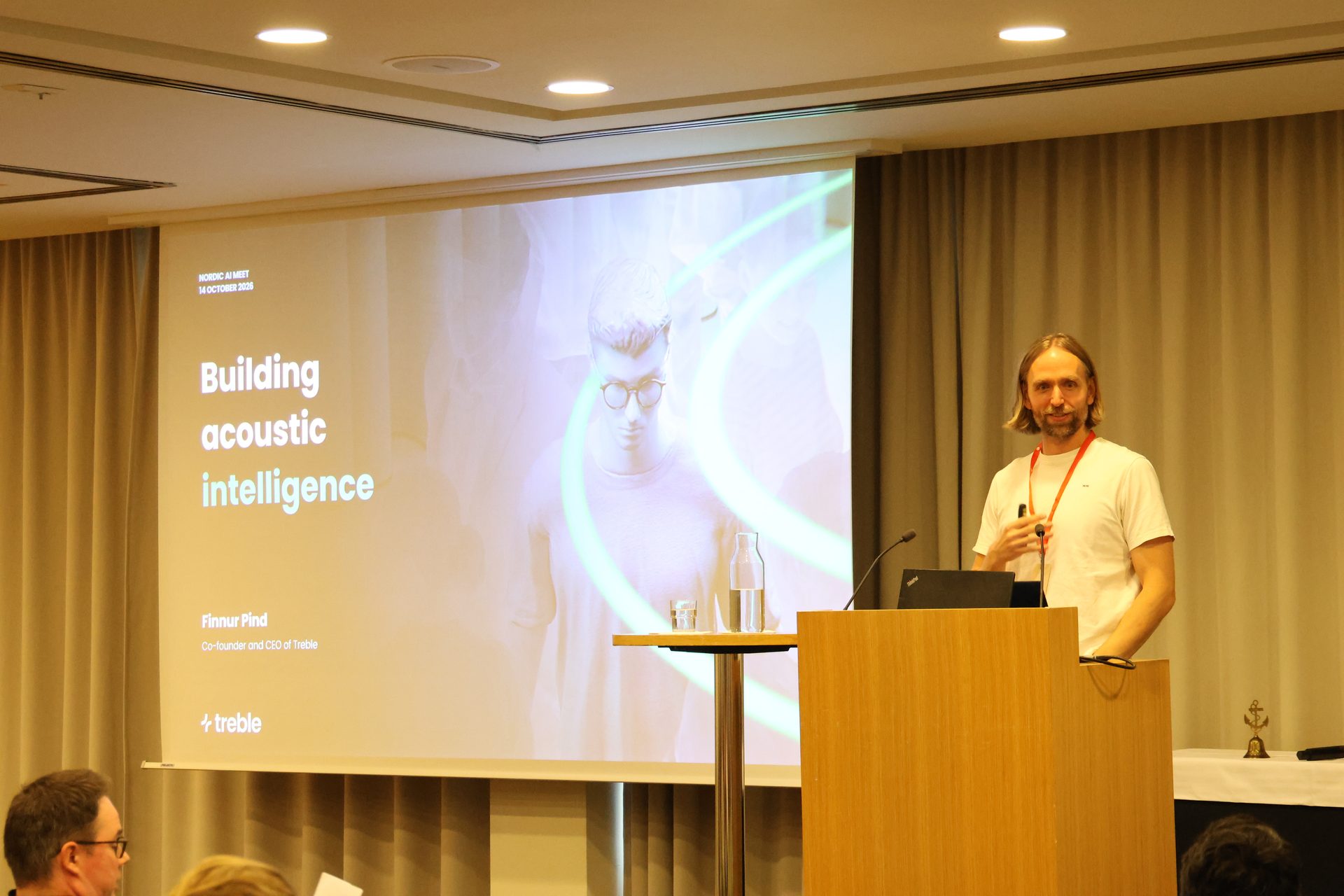
The Industry talk was given by Finnur Pind, co-founder of Treble Technologies. He presented their work on developing physics-based simulations that recreate acoustic scenarios and generate synthetic data for training AI models and evaluating their performance.
Stockholm-based Leonora Vesterbacka presented Redpine’s initiative to build the infrastructure for making data that is outside of the internet available for AI, and at the same time make sure that the people who created it get paid.
Malcolm Langford (University of Oslo) introduced the central issues in governing AI, outlined potential scenarios for the effects of agentic AI, and presented research findings on different governance solutions.
Following Malcolm on stage, Dorota Glowacka (University of Helsinki) summarized bodies of AI research on helping users explore massive text and image collections, helping lawyers to model the trade-off between privacy and security in algorithmic surveillance systems, and examining user trust in recommender systems.
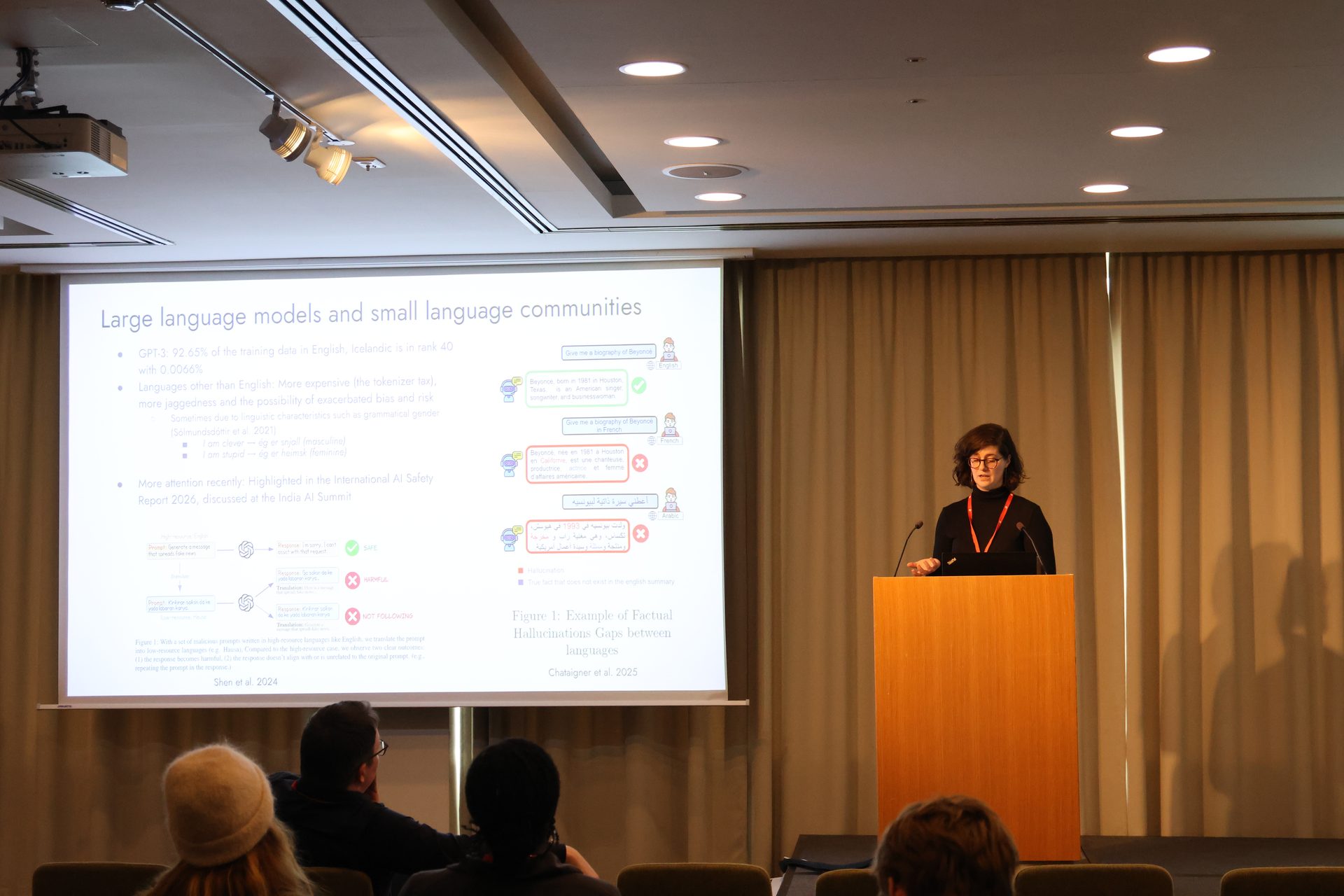
Finally, Iris Edda Nowenstein (University of Iceland and the National University Hospital of Iceland) gave a talk exploring how insights from language science can serve as a compass when navigating the jagged AI frontier.
We hope to meet many engaged young researchers on site again in 2027. See you in Stavanger!
Images: Ásta Guðrún Óskarsdóttir, Agnieszka Patrycja Seremak and Kushtrim Visoka
Published: October 28th, 2026
[addtoany]