

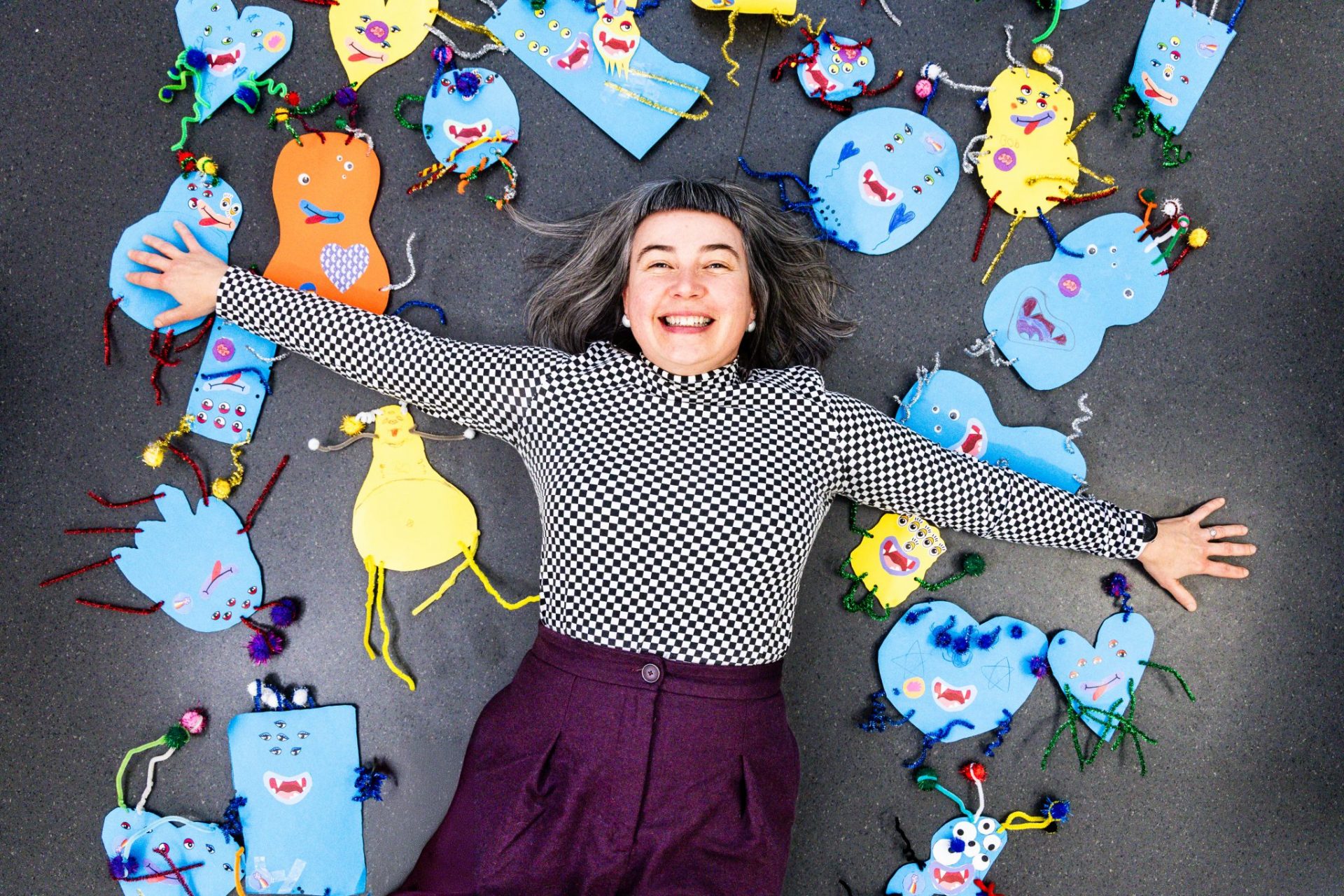
Image and text courtesy of Linköping University.
Miriah Meyer is a WASP Recruited Faculty. See the list of all Recruited Faculty
What is data? How is it created? What does it consist of? Can it be objective? These are theoretical questions that interest Professor Miriah Meyer. But as AI development accelerates, she also wants to contribute practical knowledge that enables us, as humans, to shape a better future.
In Miriah Meyer’s office on Campus Norrköping, there is a box of aliens. Some have six eyes, others three or four. One has ten arms. Miriah Meyer calls them Data Aliens.
Fifty metres away is Visualization Center C, Norrköping’s own science centre. There, the aliens have been created from yarn and paper by visiting children who have been asked to walk around and collect data. How many steps can they find? How many red objects? The random results then determine the aliens’ appearance, such as the number of eyes or arms. The result is a creature that serves as a physical visualisation of the data collected by the children.
The mystery of data
Data visualisation is Miriah Meyer’s area of expertise. In other words, how to transform the complex and abstract into something clear and tangible through images, graphics or, as in this case, aliens. Doing so is anything but child’s play; instead, it raises deeper, theoretical questions, she says.
“If you take the rings of a tree, is that a data visualisation? And if it is, what is data and what is visualisation? Are they the same thing or two different things? What is data when it isn’t being shown? And who has created the data?”
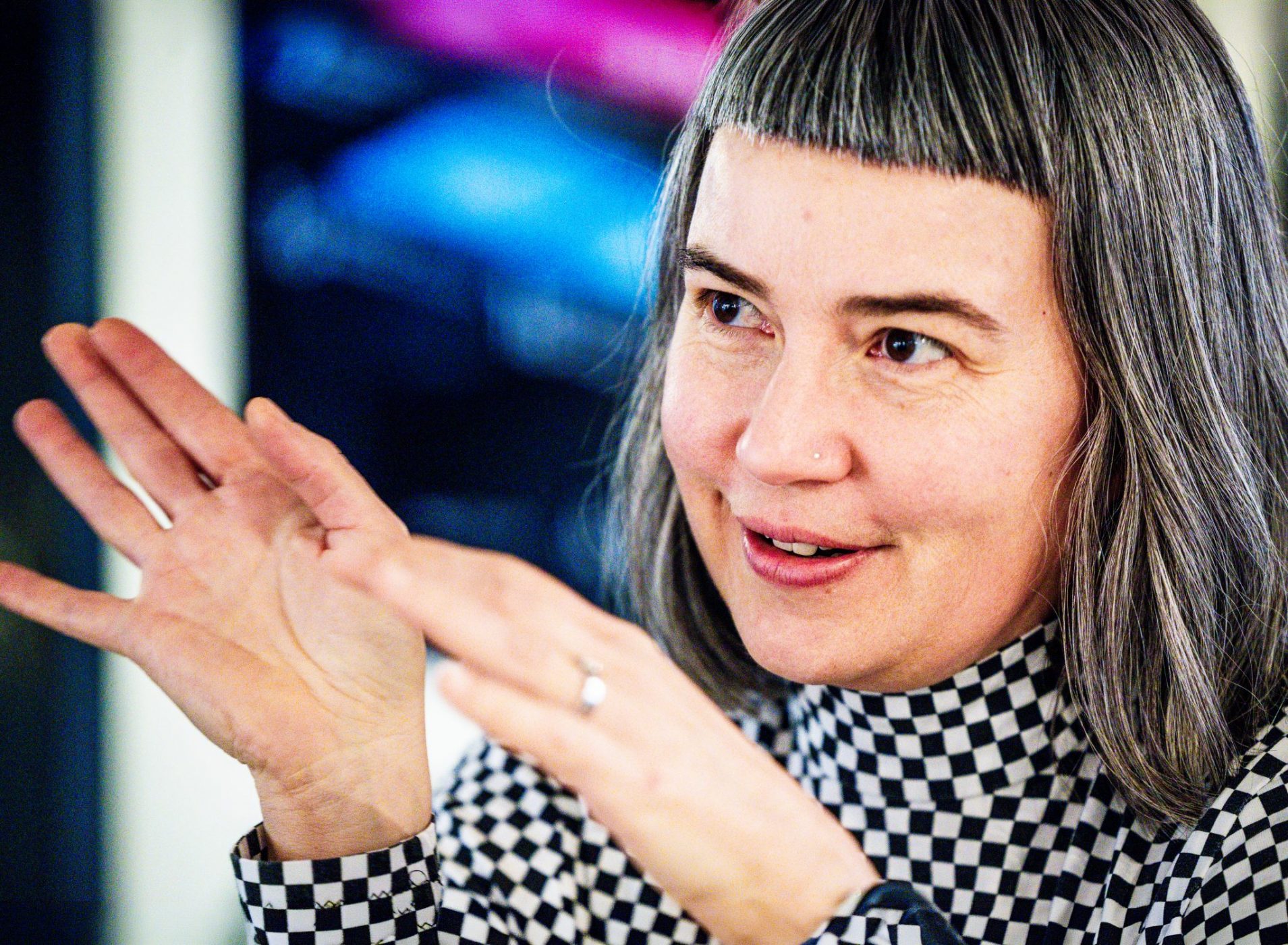
Miriah Meyer.”This is my thing!”
Miriah Meyer came to Sweden from the United States in 2021. Her professional career began as a programmer at a company in the defence industry. She discovered that she really enjoyed the work and began looking for university courses.
“I ended up on a computer graphics course where we also talked about visualising scientific data, and I just felt that this is my thing! So I applied for a doctoral programme in visualisation, which led to a PhD in computer science.”
Since then, she has worked at both Harvard and the University of Utah, and also spent a year in Vienna. As her family was preparing to return to the United States, she received an enquiry from WASP and Anders Ynnerman, who was Program Director at WASP at that time, professor of scientific visualisation at Linköping University and director of Norrköping’s visualisation centre. Would she consider moving to Sweden to work here?
Sadness and grief
It was not an easy decision. At the same time, she had been offered a position in Seattle. What ultimately made up her mind was developments in the United States, which she is deeply critical of.
“Going to the US just makes me sad. I feel a sense of grief, because there are things about the US that I love and miss. But when I’m actually there, there’s so much that makes it impossible for me to imagine living there.”
The opportunity to work with the Visualization Center in Norrköping was also appealing. Here, visitors can experience data visualisations of mummies, crime scenes, space and much more. The centre also hosts the exhibition Data and Me, which Miriah Meyer helped to develop, where visitors can try visualising their own data on screens.
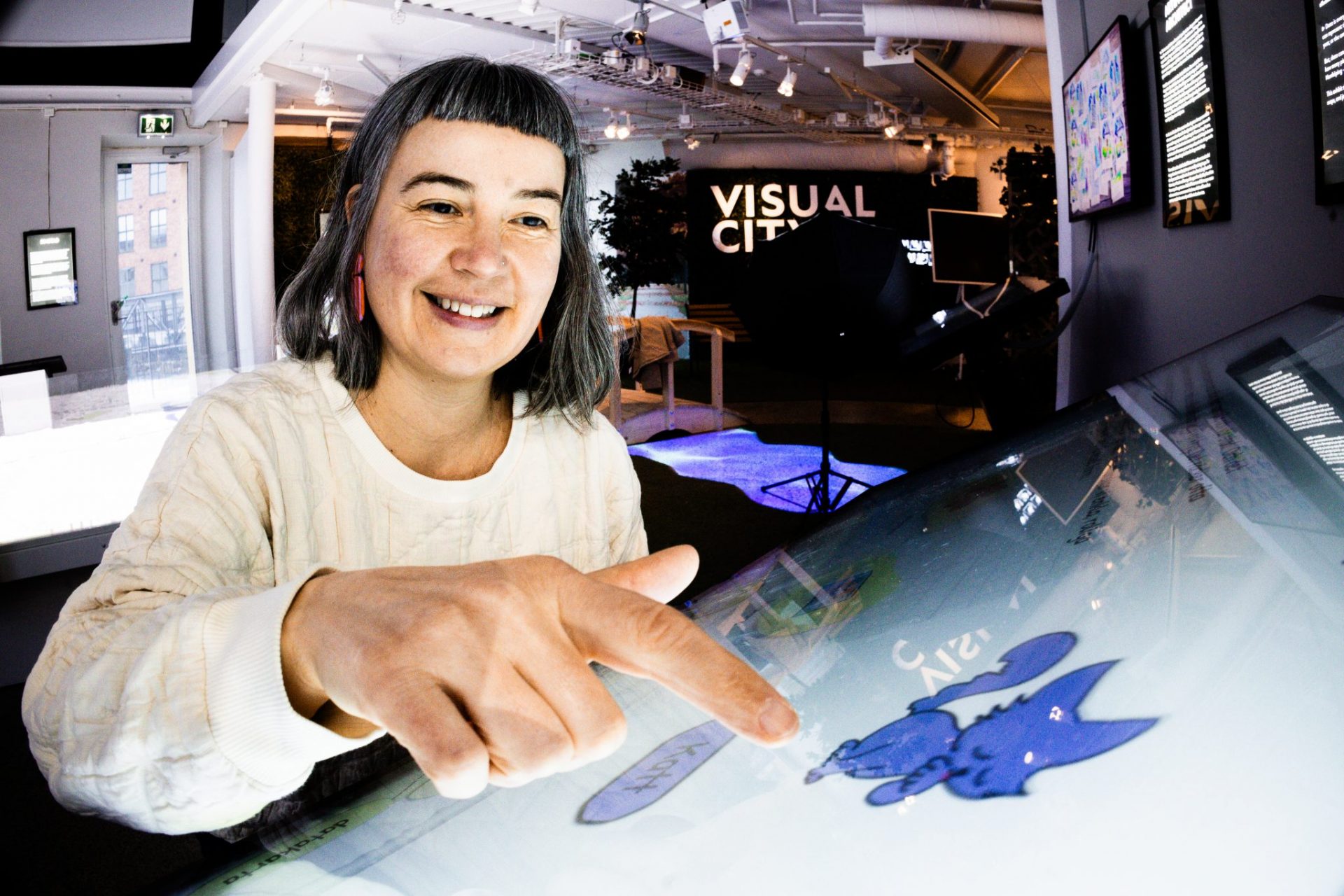
The exhibition is part of a larger research project that, from a social science perspective, examines our assumptions about what data is. Data – including scientific and technical data – always exists within a context. Who selects it? What is left out, and why? What happens when it is processed? In her research, Miriah Meyer has drawn inspiration from feminist theory and other perspectives.
“I’m like a fan girl of theory! I love theory. I love when someone writes something that just makes my brain explode!”
Yet, although theory fascinates her, she is also practically minded. Knowledge has to be usable. In her research, for example, she has developed methods for visualising uncertainty in data. Another project focuses on illustrating data hunches – the intuition experts use when deciding which data is relevant in a visualisation.
“We’re thinking about what an interface might look like that could show this gut feeling.”
A new way of thinking
It’s important to consider the limitations and biases of data, particularly as our AI systems are trained on vast datasets, she says. The “move fast and break things” approach advocated by Facebook founder Mark Zuckerberg is not good enough if we want a sustainable future, according to Miriah Meyer.
“I think that way of thinking is worn out and tired, and I believe more and more people feel worn out and tired by technology. There are other ways of doing things. I think what I can contribute is the question of what data is and helping people to grapple with it. That we can use data and create data to express ourselves and to reflect on our lives. I want to give people an entry point into data, so they can then better understand how data – data they may not have control over – also affects their lives.
Published: April 20th, 2026
[addtoany]