



This press release is originally from the Knut and Alice Wallenberg Foundation website.
Within the framework of the research program Wallenberg AI, Autonomous Systems and Software Program (WASP), the next step is now being taken to secure Sweden’s digital future. Within a new research arena, WARA AI‑TRICS, the development of a high‑quality national language model for the Swedish language is being launched.
For Sweden to keep pace with the rapid development of artificial intelligence, a high‑quality national language model deeply rooted in the structures and nuances of the Swedish language is essential. This is important for research, academia, media, cultural sectors, public services, and businesses.
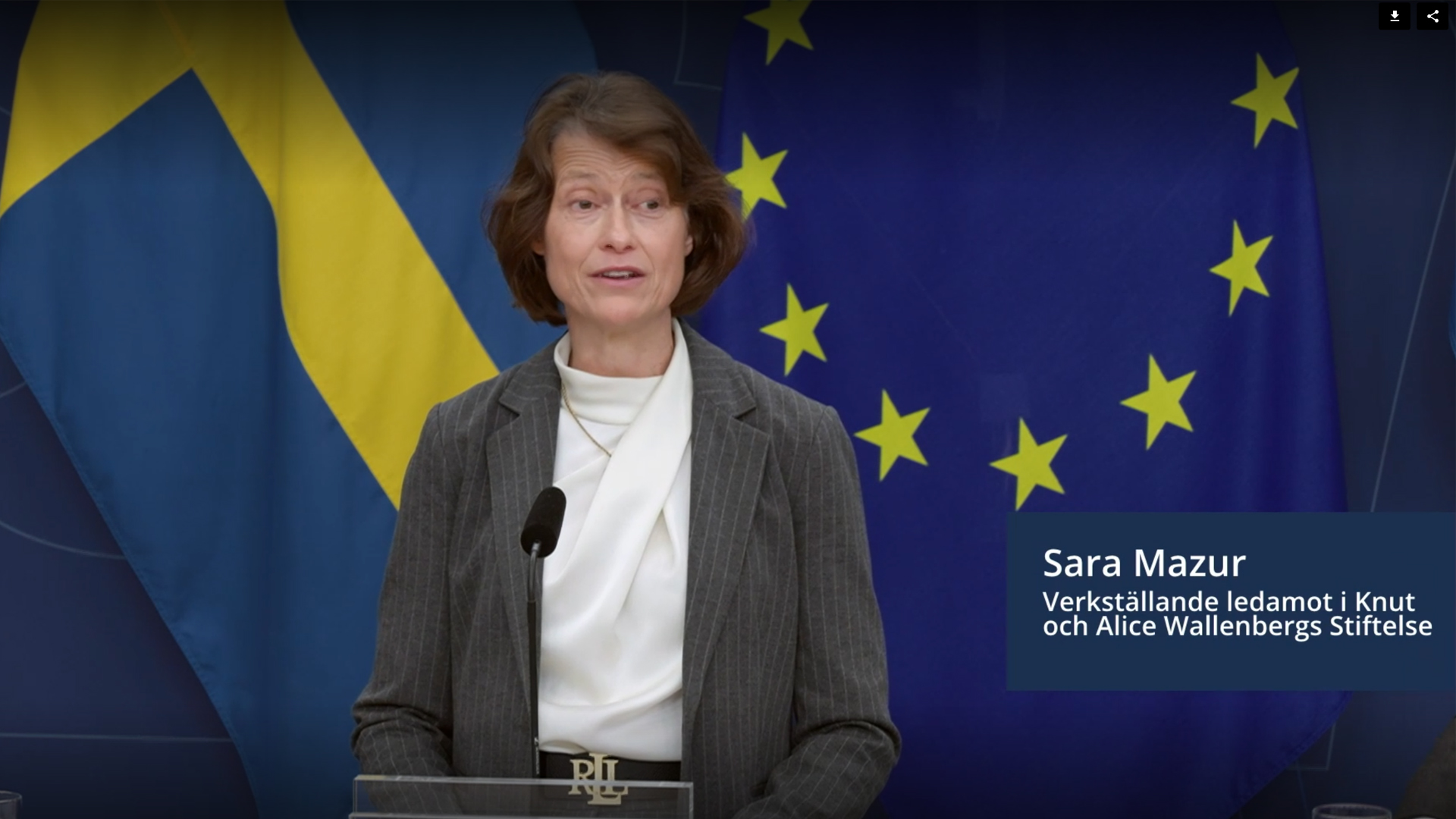
To meet these challenges, WASP is establishing a new research arena—WARA AI Training and Inference Compute at Scale (WARA AI‑TRICS). The arena’s first project will focus on developing a large‑scale Swedish language model based on state‑of‑the‑art technology, which was presented at a press briefing today with Prime Minister Ulf Kristersson, Minister for Public Administration Erik Slottner, and Minister for Upper Secondary School, Higher Education and Research Lotta Edholm.
AI model tailored to Swedish contexts
The project is unique and has been initiated by researchers together with authors, book publishers, and news media organizations, which are co‑funding the effort by contributing high‑quality, editorially reviewed training data reflecting Swedish values and norms. The work is being carried out with a clear commitment to safeguarding copyright.
The goal is to create a model that not only speaks and writes Swedish but fully understands Swedish contexts—from government decisions to the education system. At the same time, the initiative builds important national competence across the entire AI lifecycle, from data management to training and implementation.
The project’s research team consists of leading experts from eight of Sweden’s top universities.
“The long‑term ambition for the language model is to create a safe, ethical, and sustainable solution of high quality for government agencies, the public sector, media companies, and other Swedish organizations. This is a matter of national importance for Sweden,” says Sara Mazur, Executive Director of Knut and Alice Wallenberg Foundation.
WASP, the largest single research program funded by Knut and Alice Wallenberg Foundation, is financing the project with up to SEK 30 million. In addition, massive computational resources are being provided through the Berzelius supercomputer at Linköping University, also funded by the Foundation. Total funding from WASP may reach SEK 40 million.
Published: February 23rd, 2026
[addtoany]