



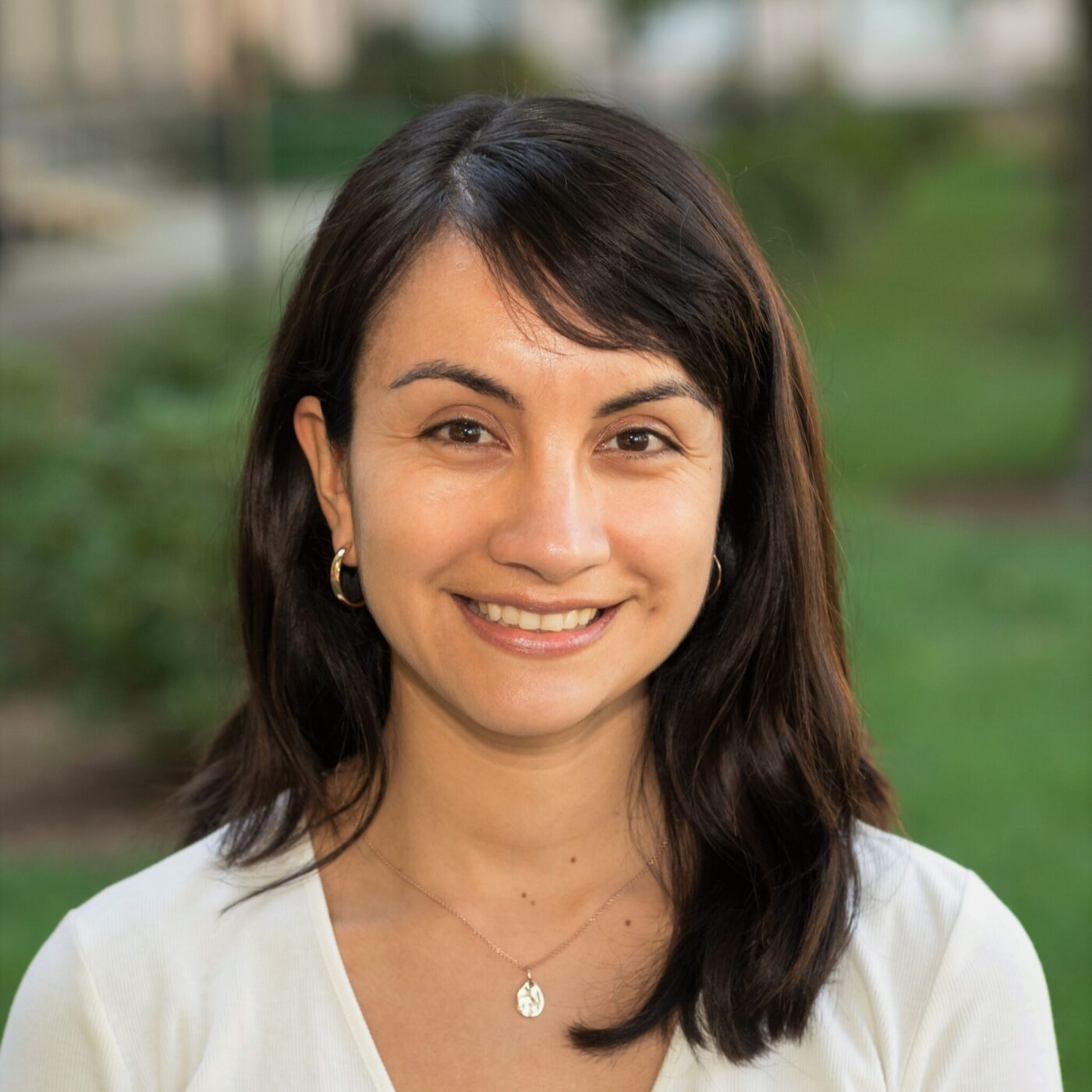
WASP Fellow Rocío Mercado Oropeza leads the AI Laboratory for Molecular Engineering (AIME) at Chalmers. Her aim is simple to describe but hard to deliver: to build tools that help people design molecules ‘to order.’ In other words, tools using AI to deliver molecules that have certain desired qualities – without the traditional, time- and resource-intensive processes in molecular design.
“If we want to design molecules with a particular set of properties for a specific application, we should have the tools to do that in a data-driven way,” she says.
AIME’s scope is intentionally broad. Since molecules make up everything, this approach can be applied to nearly every field, from drug discovery to multi-component oxides to materials design.
“The methods we develop are agnostic to what type of molecules it is that we are trying to design, though not the type of molecular representation,” notes Rocío. This means certain modalities, like polymers, remain challenging.
The real bottleneck
In the AI landscape, generative models grab headlines. However, the real work when it comes to molecules is not generation, it’s specializing that generation toward a specific end: “We can generate valid small molecules, no problem,” she says. “The challenge is in optimizing them for a specific application.”
The goal is to replace a slow simulation or a costly assay with a fast prediction. “We need to be able to make this prediction for a molecular property in a fraction of a second.” For generative AI, it’s too slow if it takes hours. This is why speed and accuracy matter together; the search loop depends on both.
The goal is decision support, not magic answers. As Rocío puts it: “It’s to help chemists prioritize which experiments to run, which molecules to test, based on all the data we have up to that point.”
Two NEST projects, kicking off together
Rocío Mercado Orepeza just participated in the launch of two WASP-co-funded NEST projects. In [AR1] collaboration with DDLS and five other PIs across Sweden, one project develops AI methods for time-resolved microscopy data at the single-cell level.
The second, a WASP-WISE collaboration, targets AI for designing solid polymer electrolytes, building on a pilot project from last year.
Models currently serve small molecules well; complex polymers are more difficult. “What makes them way more challenging is they don’t have necessarily a well-defined structure or topology,” Rocío notes. Standard computational representations no longer map cleanly to the physical material.
So, the lab flips perspective: map how the polymer was made. “When we synthesize polymers, we have a clear recipe for how we made a particular polymer. Each ‘recipe’ should map to a specific property that we can measure,” she says. Her ERC project documents polymers with the goal of being able to use the patterns and recipes to generate future polymers.
Open by default, and grounded by partners
Industry experience shapes how Rocío works. “I really enjoyed working in industry at AstraZeneca,” Mercado says. The ties give her insight into priorities and provide real use cases.
But she is clear on what drew her back to academia: “I want to be able to publish all the tools that I develop open source and accessible to anyone.” AstraZeneca has been a good partner, she adds, because they try to reproduce on public data or open-source parts of the work. Not every company does.
The same balance appears across her network. “I have a lot of strong industry collaborations, but also a lot of strong academic ones,” she says—biology, chemistry, physics, computer science at Chalmers, plus pharmaceutical sciences and batteries at Uppsala. Collaboration is not optional when you’re not the domain expert in every area. “Those collaborations are really important to me.”
Building a lab that can do hard things
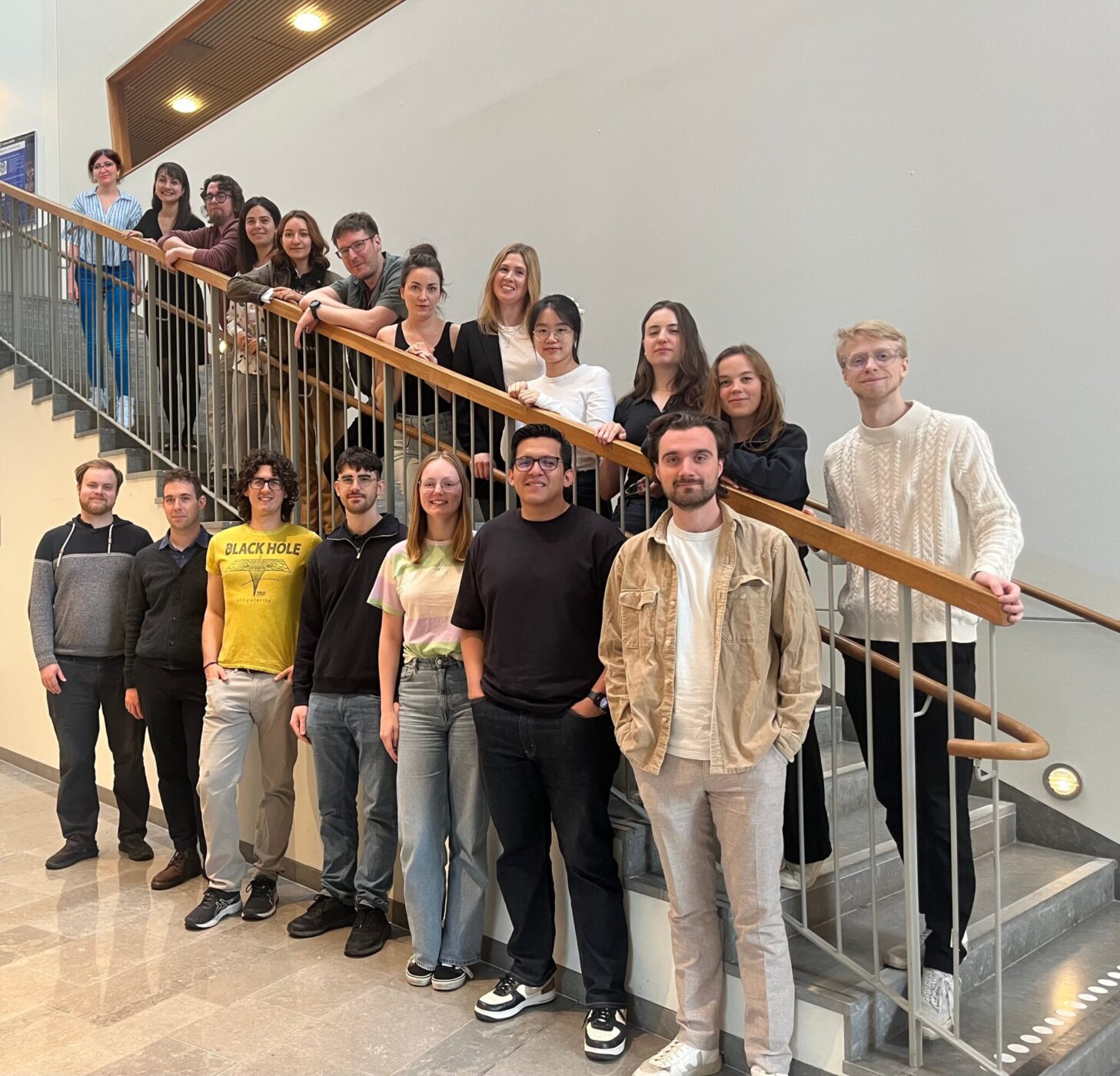
Academic freedom lets AIME pick problems and publish, but it comes with a lot of administrative work. While Rocío would rather be focused on research, the efforts have succeeded: “I’ve built a really good team here of really amazing students. I really enjoy working with them. She also points to Sweden’s funding landscape—“especially through organizations like WASP,”—as a key enabler for AIME’s successes.
Inclusion isn’t a slogan in her lab; it’s operational. “I think about it a lot when hiring,” she says—seeking diversity across culture and discipline. “We need people who come from the AI background, but also students who come with more chemistry expertise, pharmaceutical sciences, and materials.”
Sweden, WASP, and the ‘moonshot’
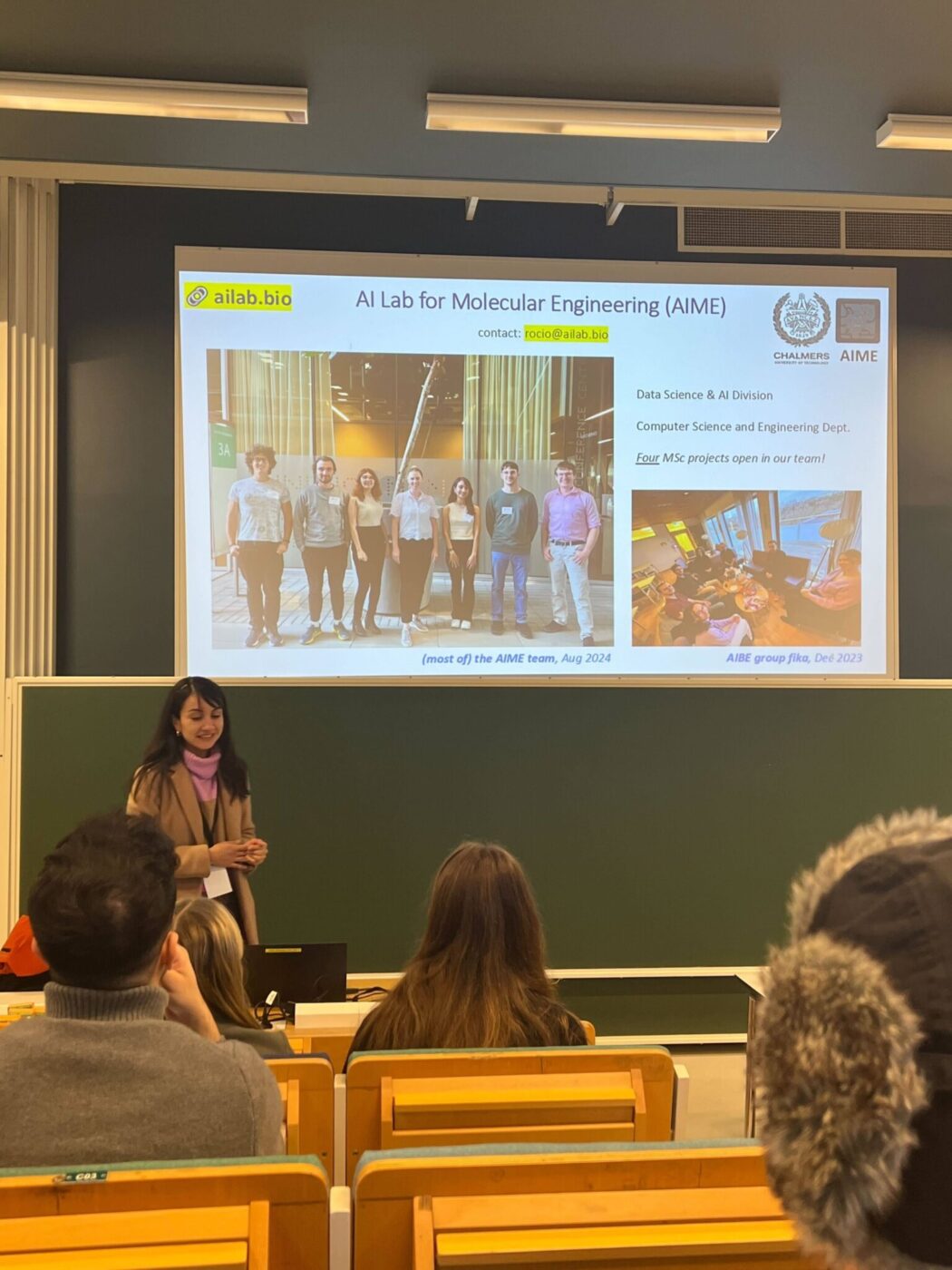
Rocío appreciates WASP’s role in Sweden. “It’s really transformed the research landscape,” she says. “Now we are actually quite strong in AI research and software engineering… it’s not a small thing.”
AIME’s dream? Imagine a molecular application with a clear specification—say, a battery material that avoids PFAS and meets a tight set of properties. “My goal is that someone can take one of the frameworks that we develop off the shelf, maybe fine-tune it with some of their own data, and trust one of the top 10 suggestions will include a winner,” says Rocío.
In the ultimate version of the methodology, “you would only need to do one experiment a to know that molecule would be the one.” Then she pulls back: “We are so far from something like that right now, and everything is so siloed.” Still, a good dream gives the next decade shape.
The energy and ethics of AI use
If there was one thing Rocio would change about the AI landscape, it’s how many people fail to acknowledge how energy-demanding AI is.
“Generative AI and large language models consume huge amounts of energy, and a lot of people are exploited in the process,” she says of the broader ecosystem.
She’s not against training big models; she’s against doing it for trivial ends. Using these tools for drug or materials design can justify the resources; making throwaway content rarely does.
Rocío’s own approach is clear: “How can we make our models more sample efficient, using fewer resources to train them and fewer resources at inference.”
Published: November 24th, 2025
[addtoany]