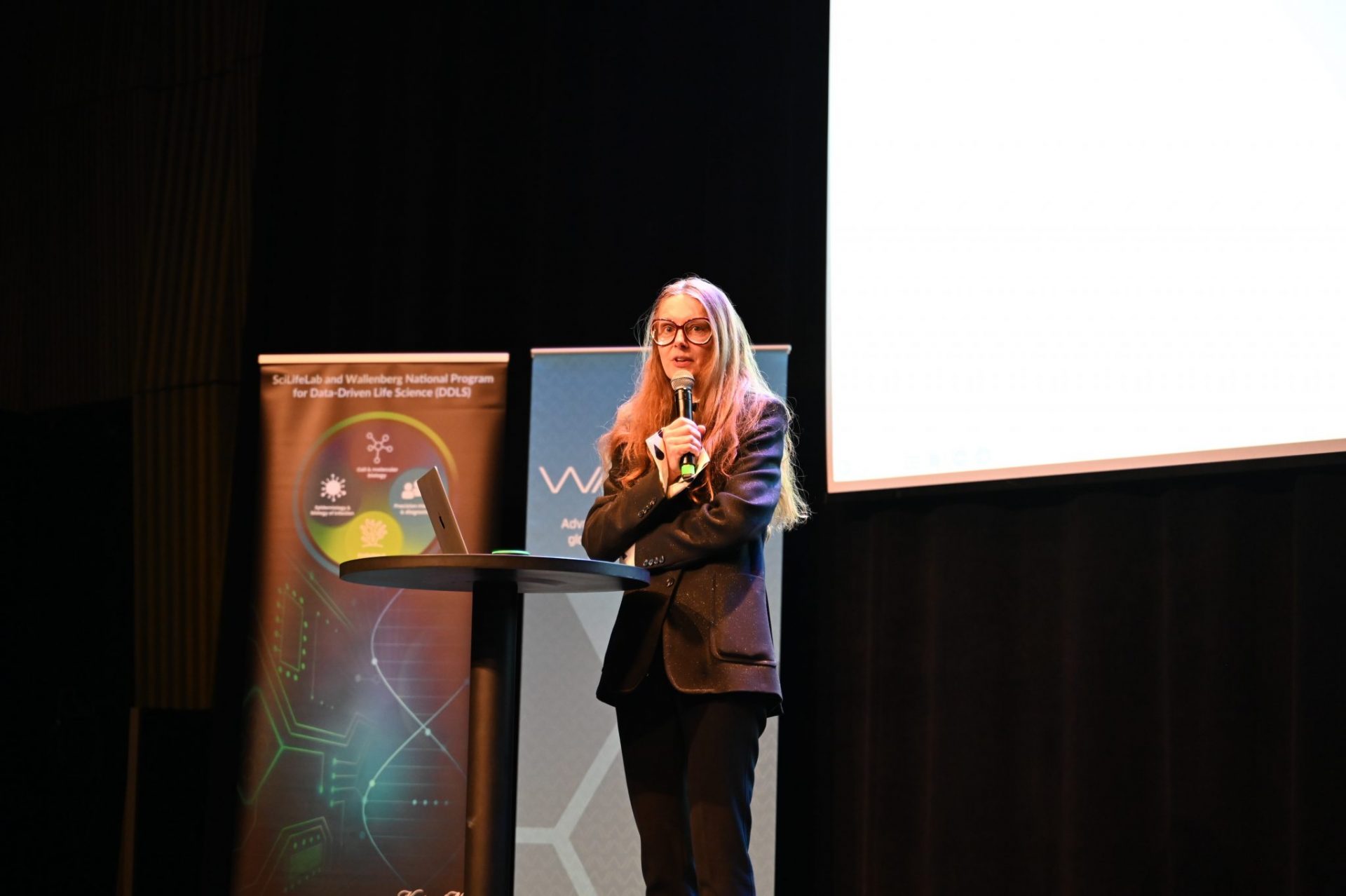
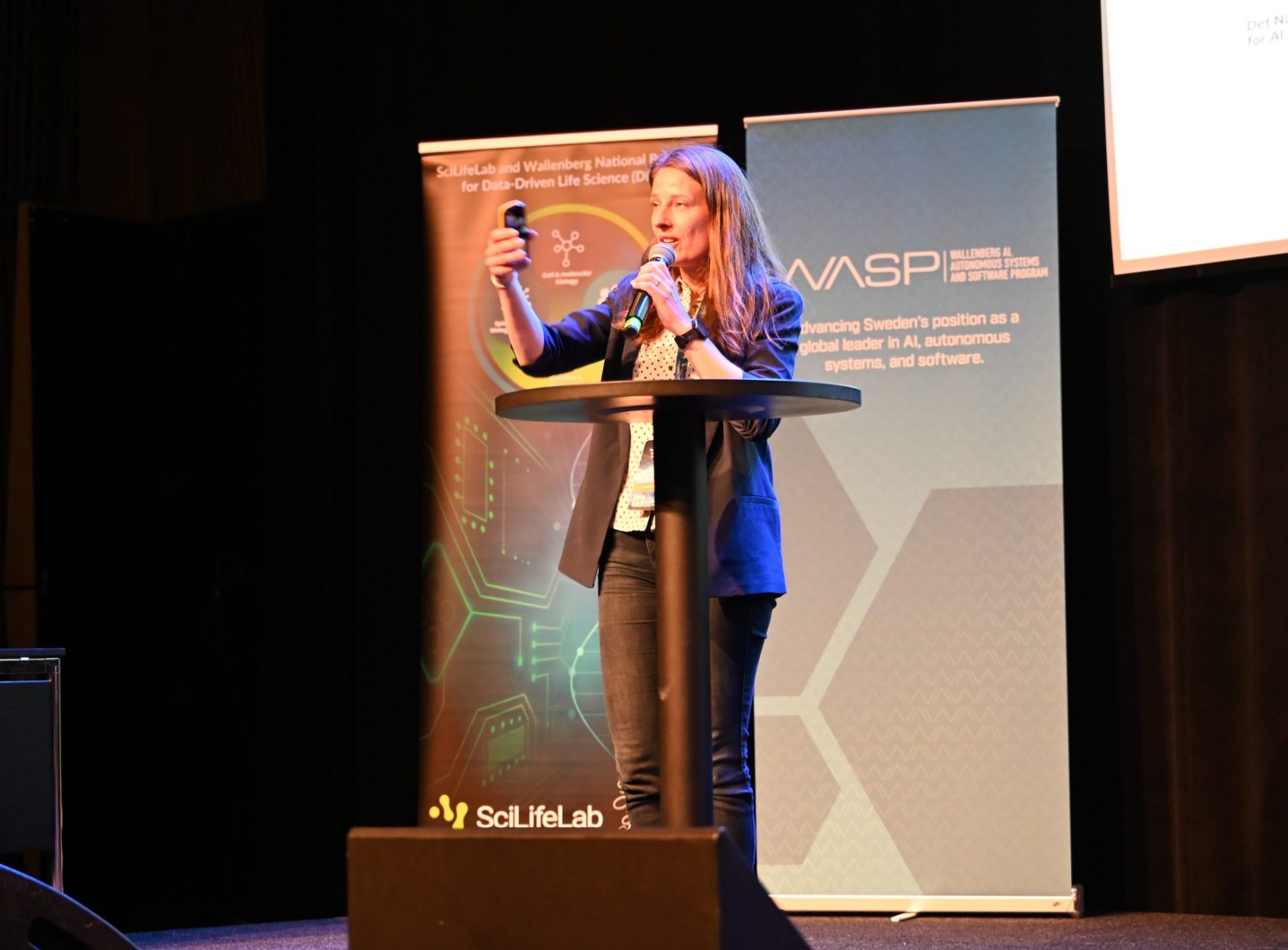
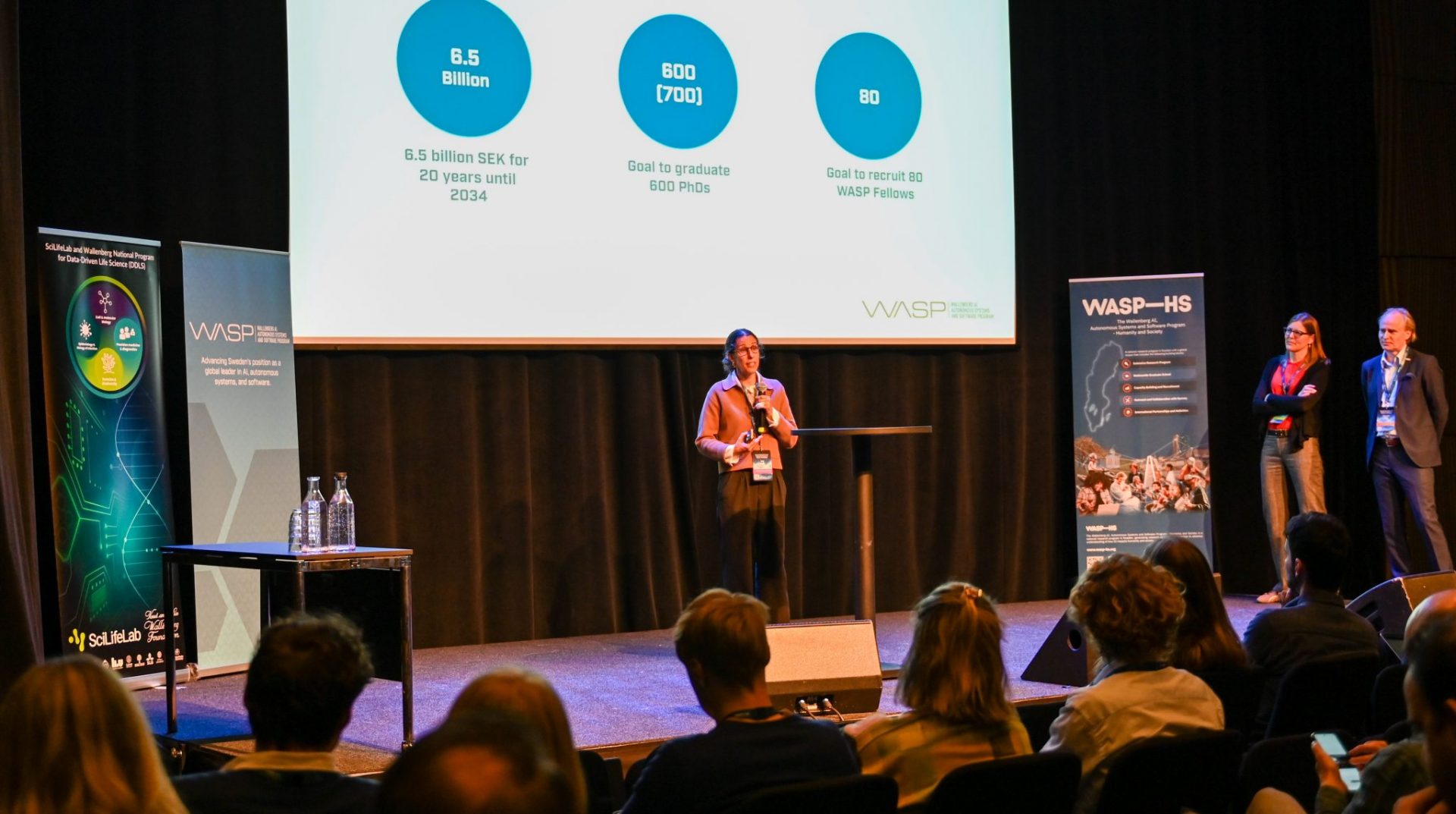
Danica Kragic, professor of computer science at KTH.

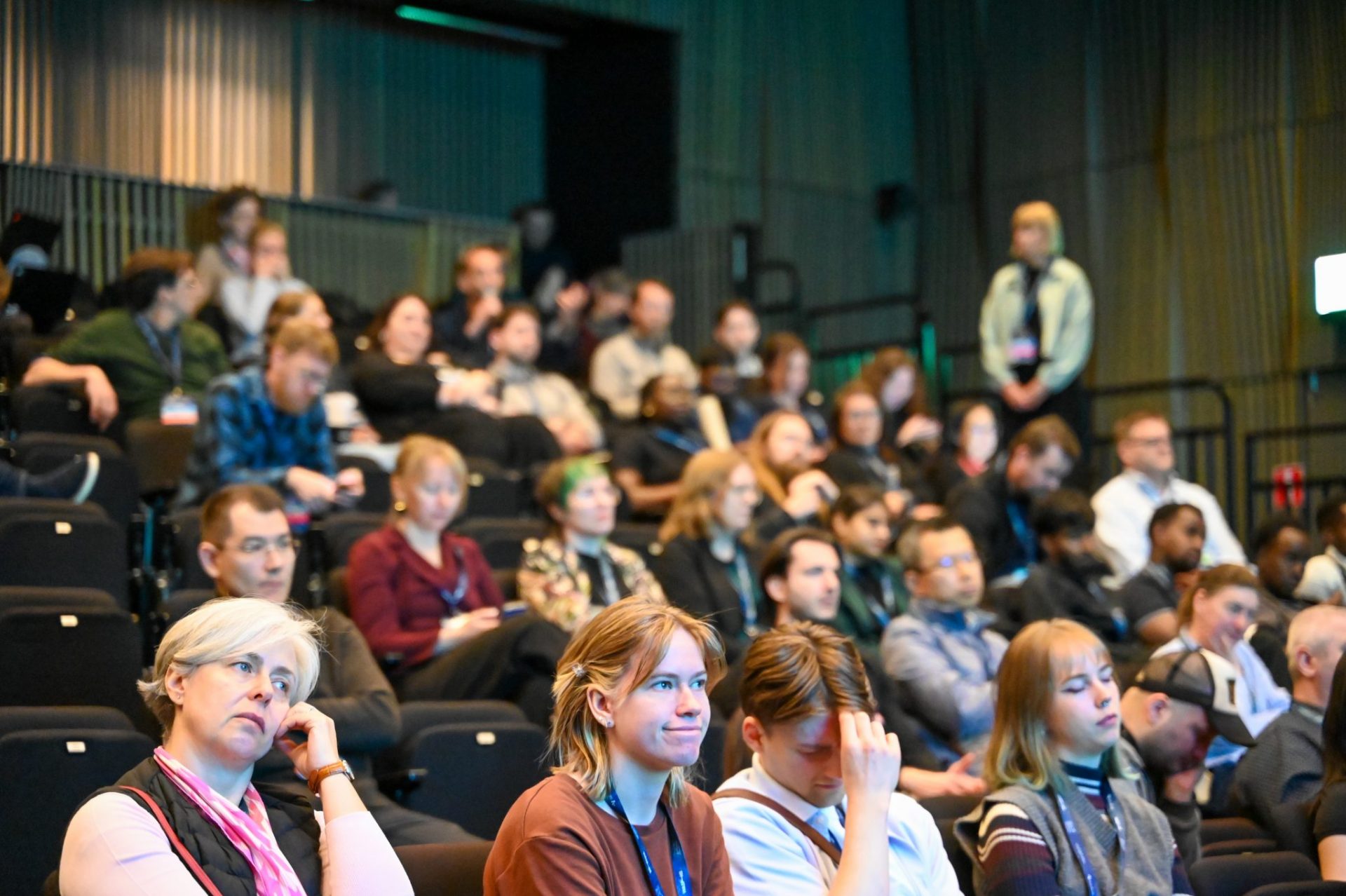
The conference “Research Opportunities at the Intersection of Society, Life Sciences, and Technology” brought together researchers from across AI, life sciences, humanities, and social sciences to discuss how different fields can work together to tackle major societal challenges. Jointly organized by WASP, WASP-HS, and DDLS in Uppsala May 7 and 8, the event focused on both the opportunities and the responsibilities that come with rapid advances in AI. The event had around 200 participants.

One of the strongest themes throughout the conference was that AI is never just about technology — it also affects democracy, healthcare, public institutions, and everyday life. In her keynote talk, Strategic Advisor to Karolinska Institute and adjunct professor at Umeå University Maja Fjaestad spoke about how algorithms and AI systems increasingly influence society and political decision-making. She highlighted the importance of transparency, accountability, and public participation, arguing that people need to understand and question the technologies shaping their lives. 

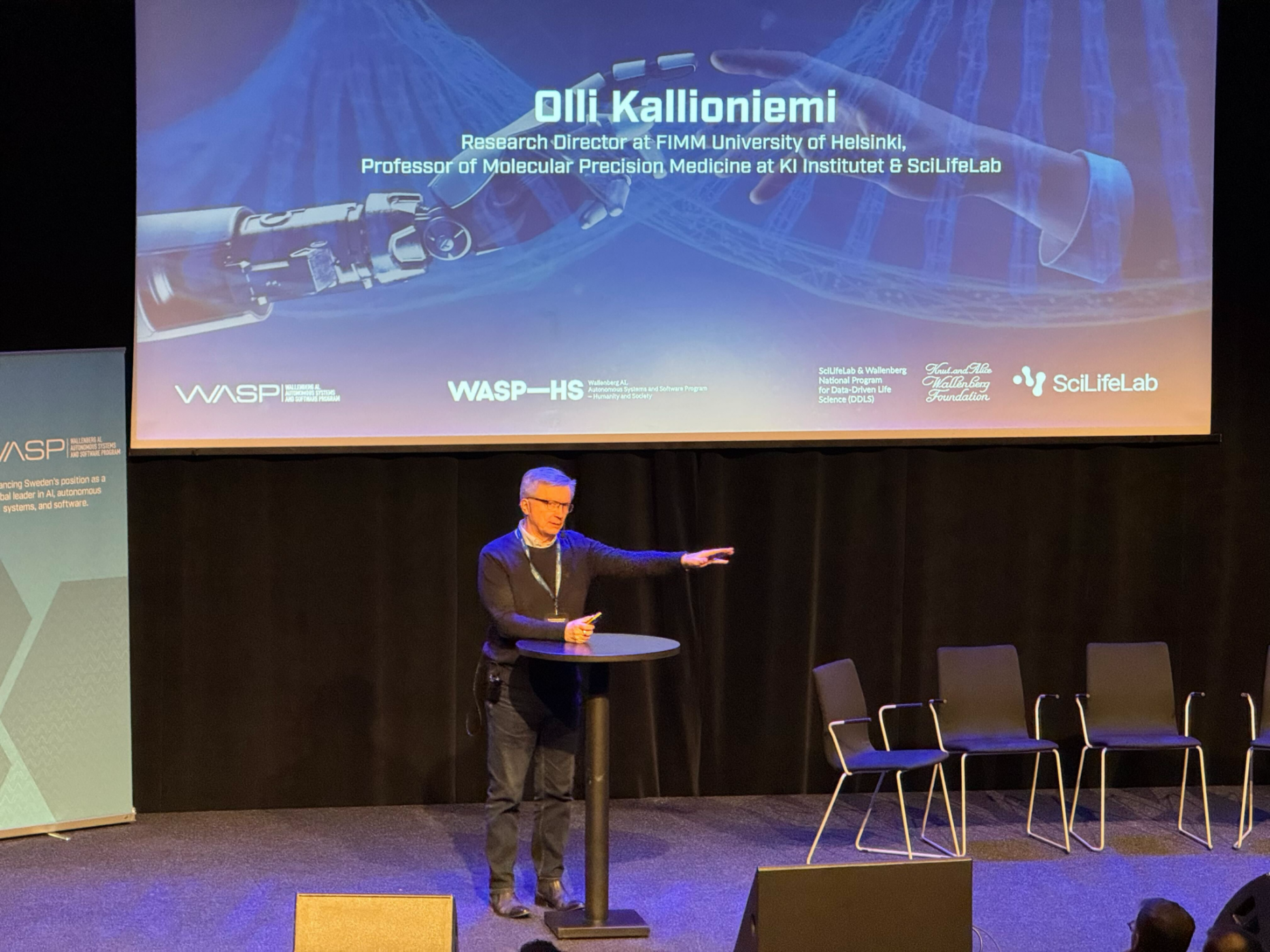
The role of AI in healthcare and life sciences was another major focus. Olli Kallioniemi,  Research Director at FIMM, University of Helsinki, and Professor of Molecular Precision Medicine at Karolinska Institutet and SciLifeLab, discussed how AI and large-scale health data could help drive precision medicine and improve healthcare in the future, while also raising important ethical and legal questions.  

Danica Kragic, Professor at the School of Computer Science and Communication at KTH focused her keynote on advances in robotics and physical AI, showing how intelligent systems are becoming better at interacting with both people and the physical world.  

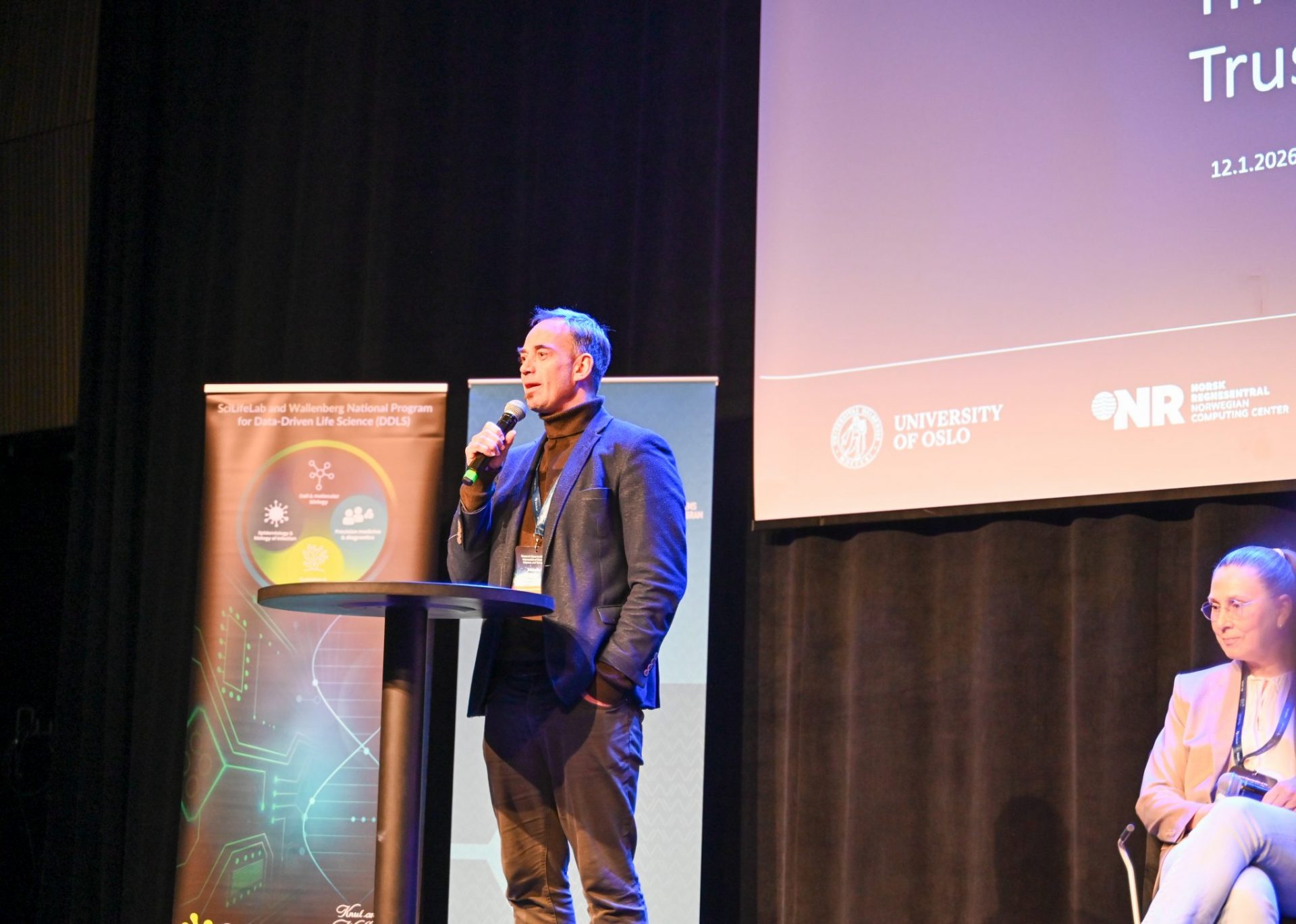
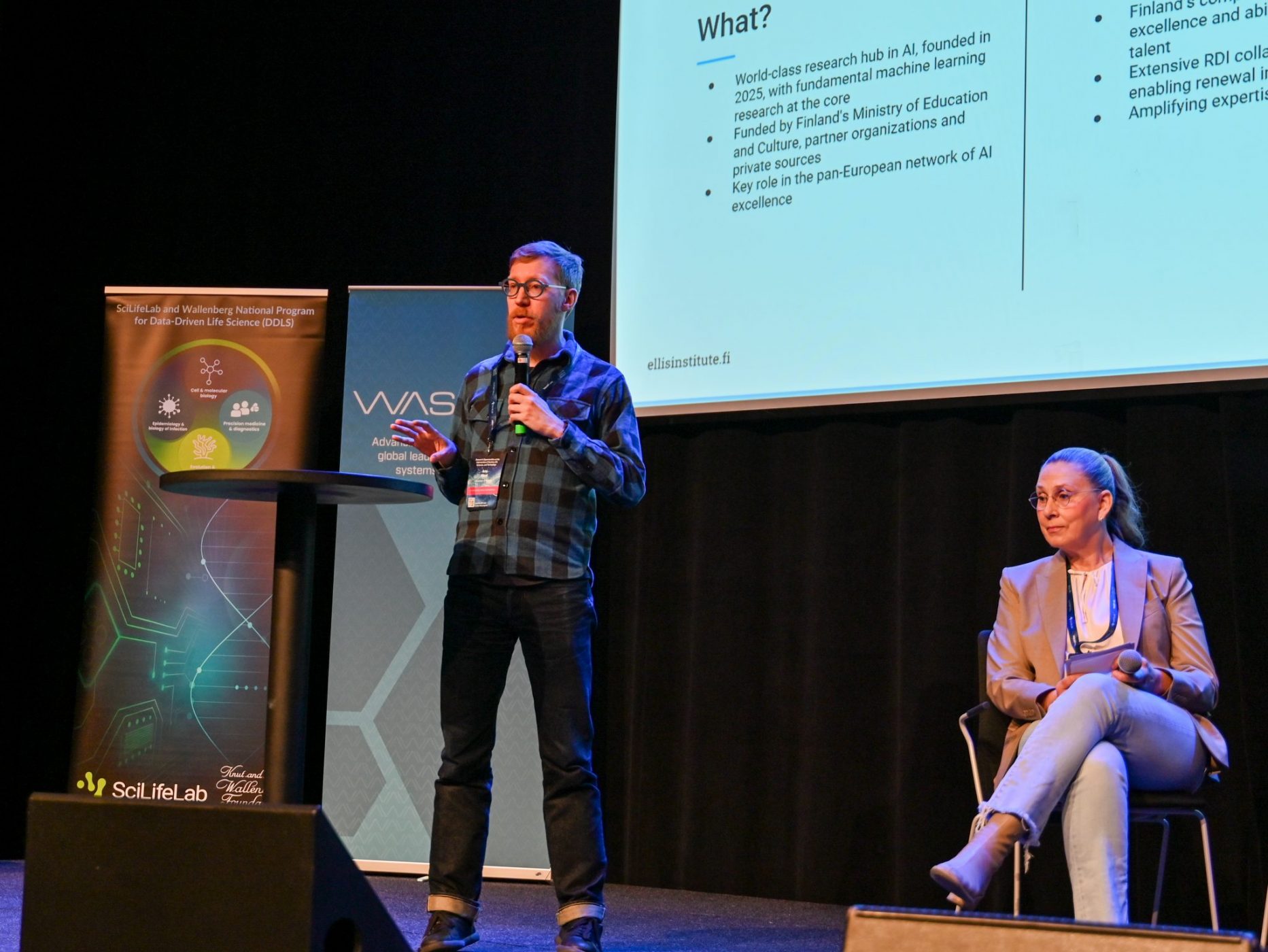
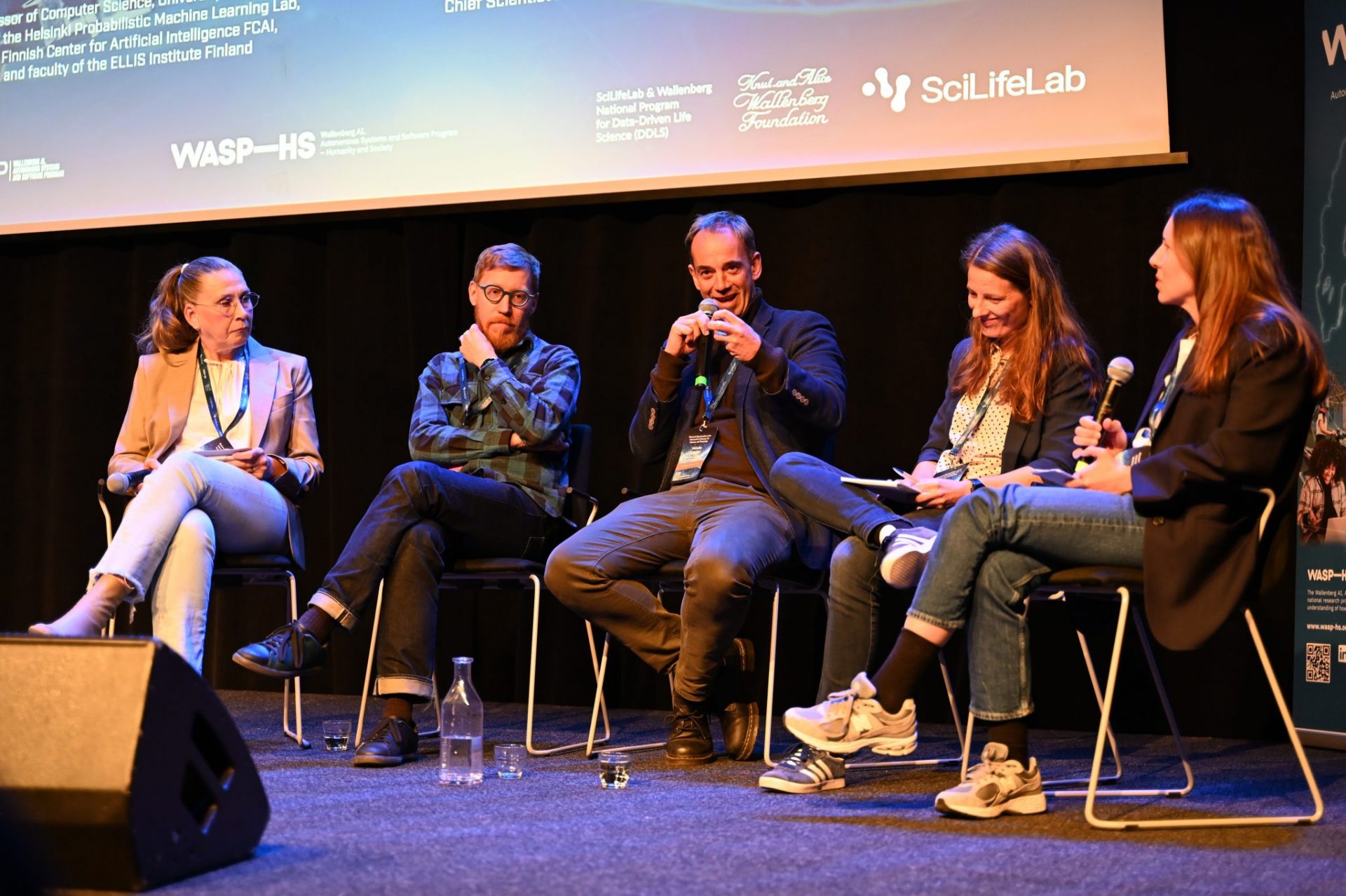
The conference also highlighted growing Nordic and European collaboration around AI research. Speakers including Arto Klami of ELLIS Institute Finland, Stine Lomborg of CAISA, and Malcolm Langford of TRUST shared examples of new initiatives focused on trustworthy, human-centered AI and stronger cross-border cooperation. 

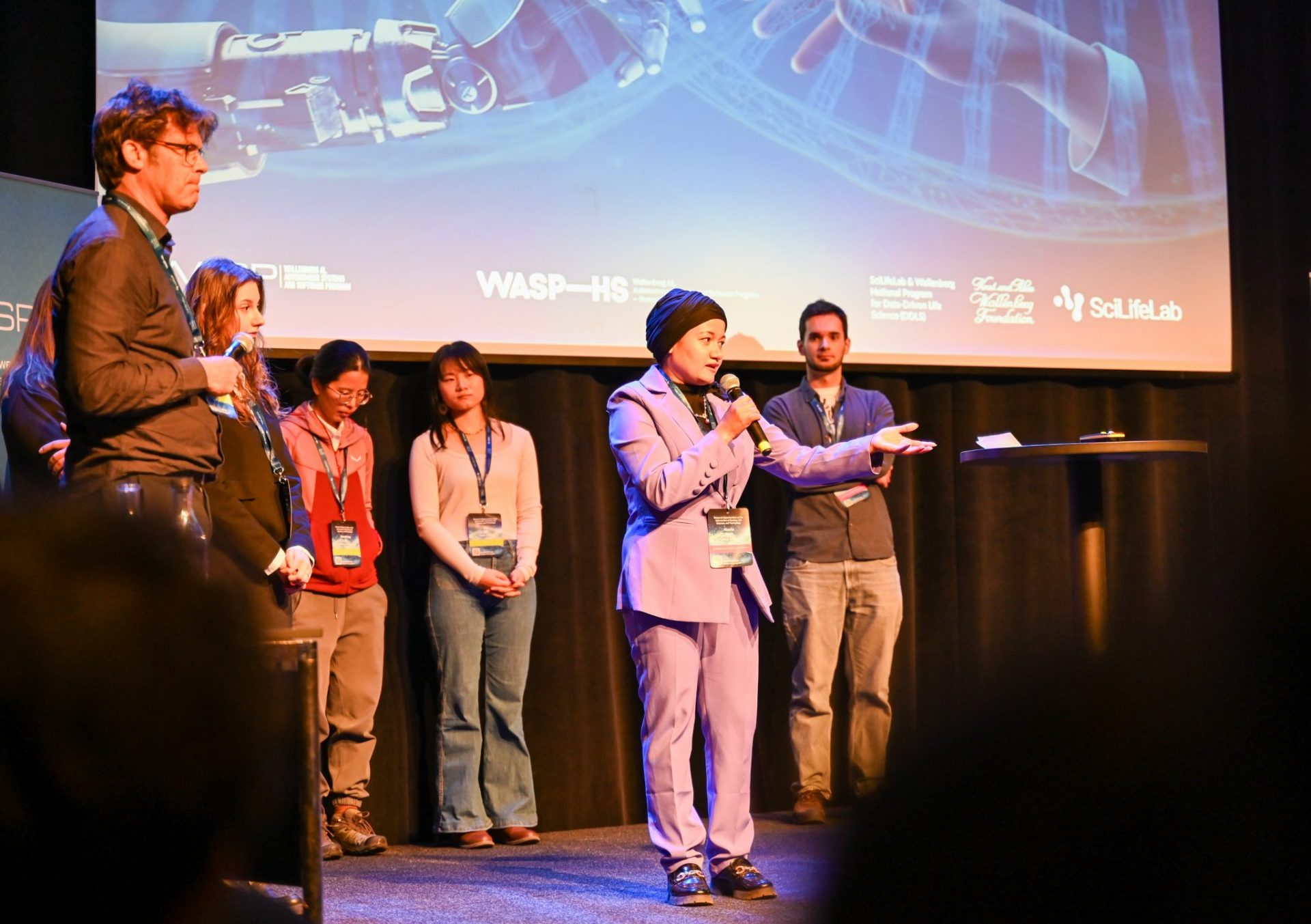
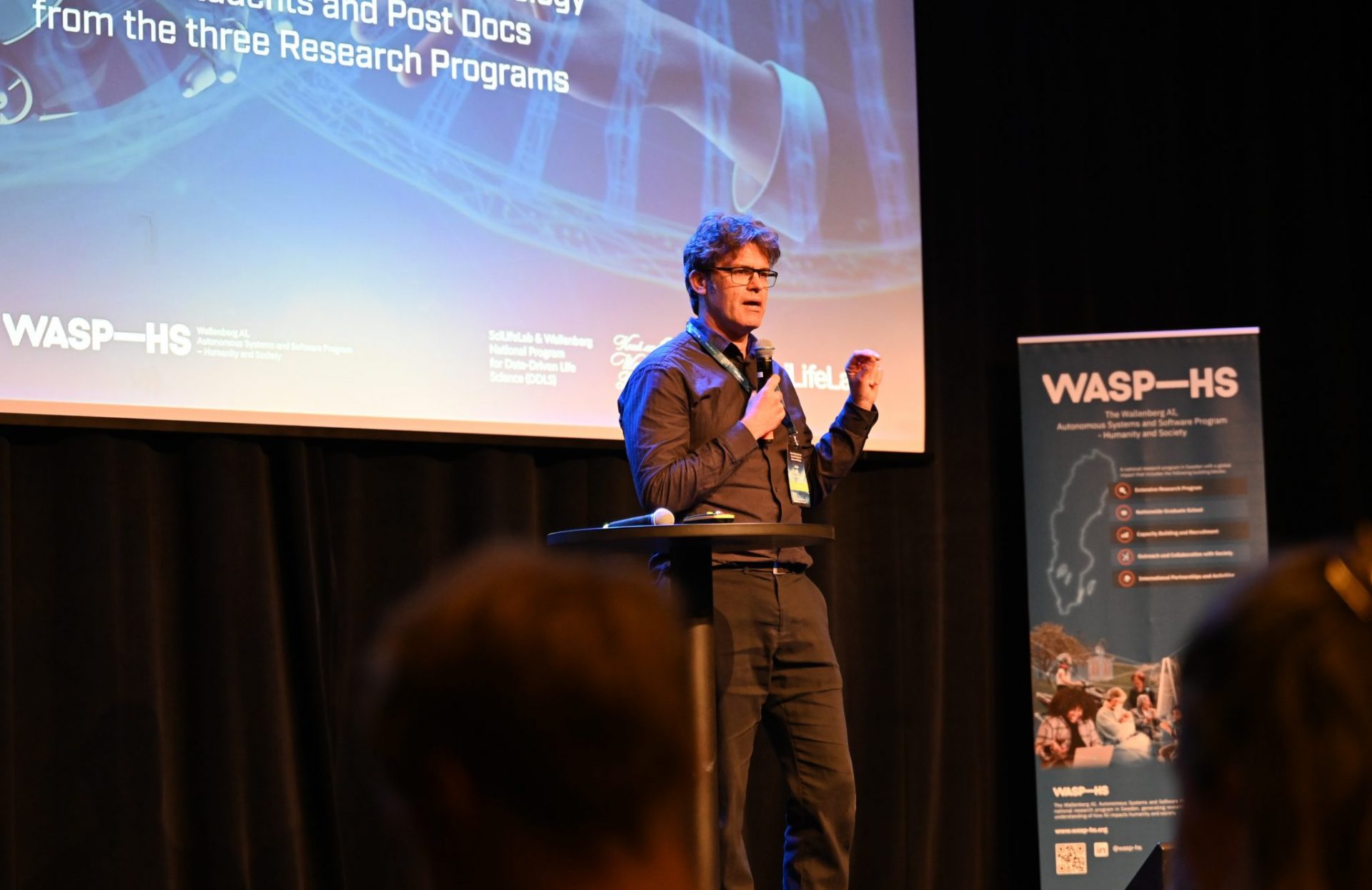
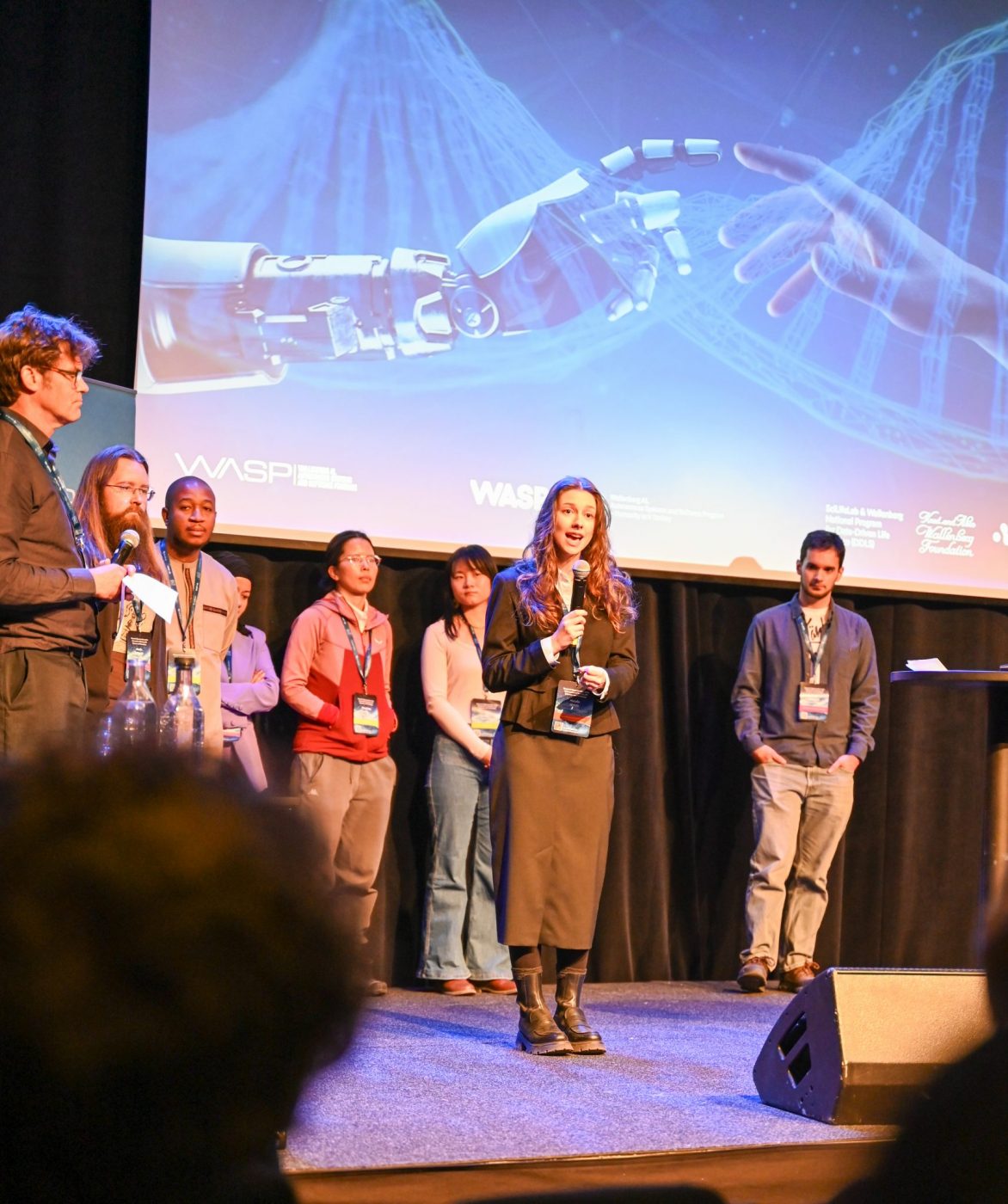
Alongside the keynote talks, the NEST Grants and Research Initiation Grants presented their projects. PhD students and postdocs presented research on topics ranging from machine learning in healthcare to AI and innovation, biodiversity, and machine psychology. Workshops throughout the day explored issues such as precision medicine, AI governance, legal accountability, and the future of foundation models. The WASP research arenas held workshops

Overall, the conference showed how closely connected AI, society, and the life sciences have become — and how important interdisciplinary collaboration will be in shaping the future of research and innovation. 
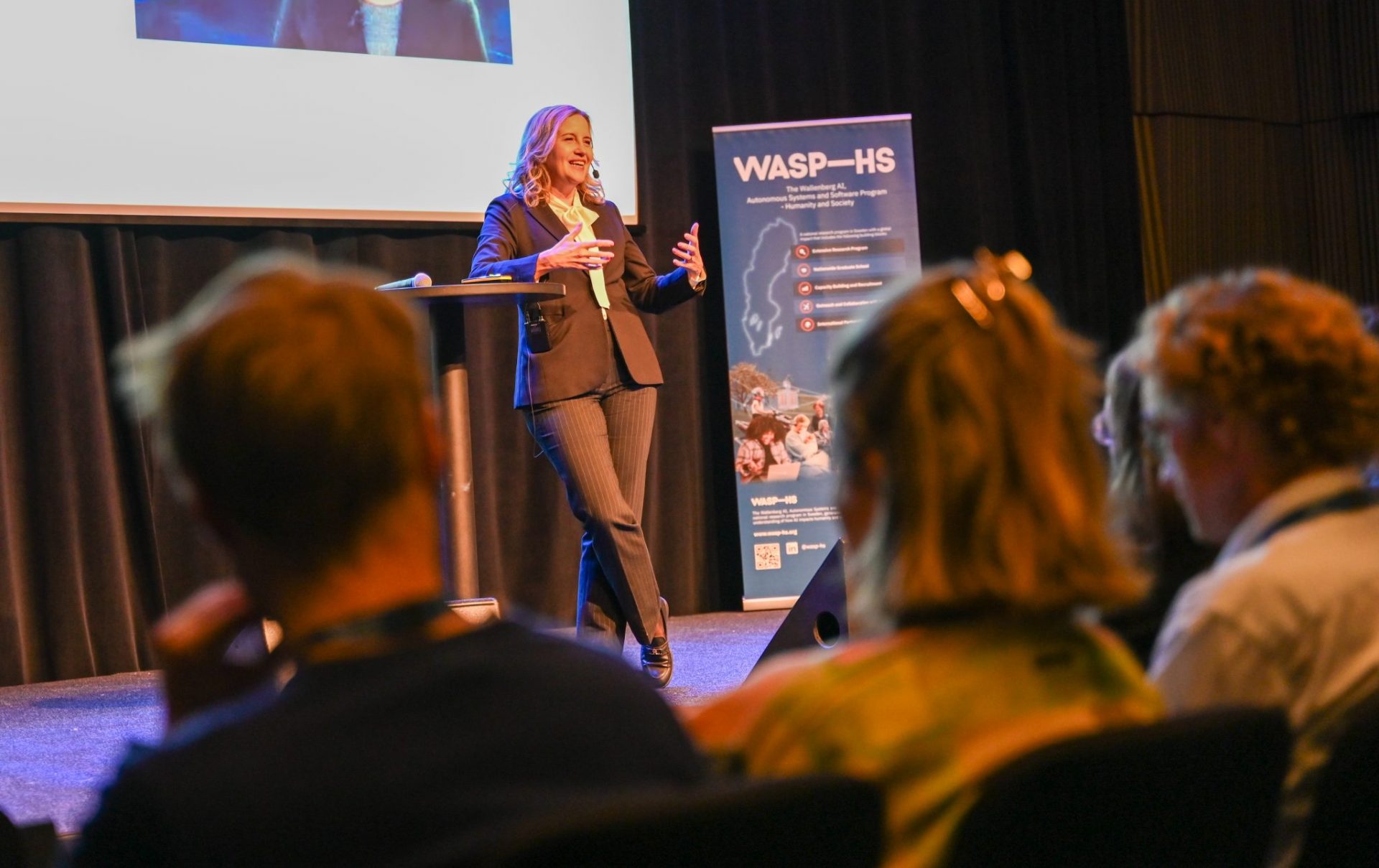
Maja Fjaestad.
Maja Fjaestad, strategic advisor to Karolinska Institute and adjunct professor at Umeå University
Danica Kragic talking
Danica Kragic, professor of computer science at KTH.
Malcolm Langford is Professor of Public Law at the University of Oslo and Co-Director of TRUST
Malcolm Langford, Professor of Public Law at the University of Oslo and Co-Director of TRUST.
Arto Klami FCAI and ELLIS Institute Finland.
Stine Lomborg, Professor of Digital Communication, University of Copenhagen
Stine Lomborg, Professor of Digital Communication, University of Copenhagen.
Nasrin Islam
Flashtalk session.
AudienceJoint Conference between DDLS, WASP and WASP-HS
Panel talk: Initiatives in the Nordics.
Amy Loutfi, WASP Program Director.
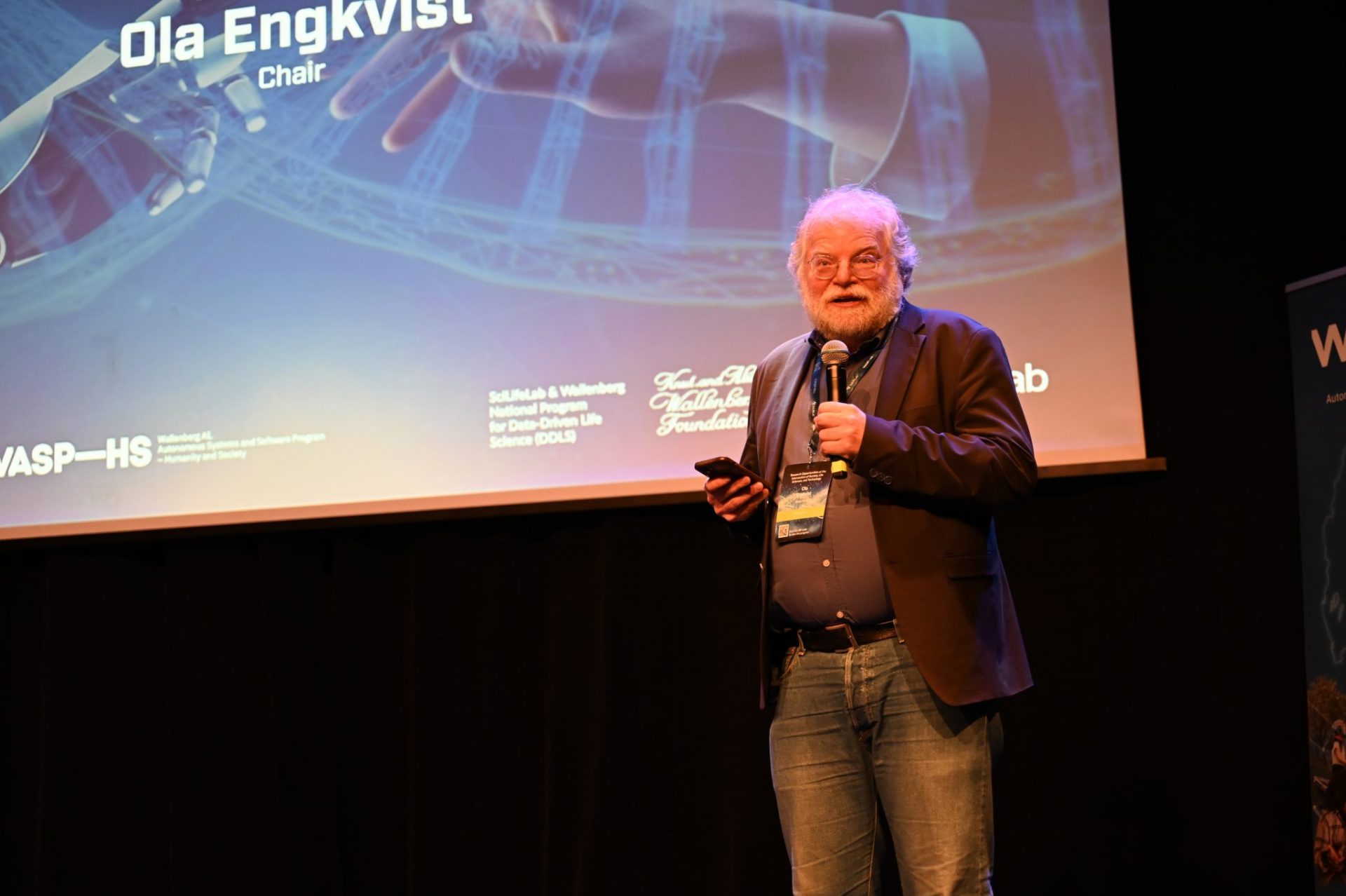
Ola Engkvist, Project Leader, WARA Medicine.
Ola Engkvist, Project Leader, WARA Medicine. The WASP research arenas held a joint workshop called “WASP Research Arenas – A Bridge Between Industry and Academia” at the conference.
Joint Conference between DDLS, WASP and WASP-HS
Lukas Käll, professor of computational proteomics at KTH.
Joint Conference between DDLS, WASP and WASP-HS
Flash talks session.
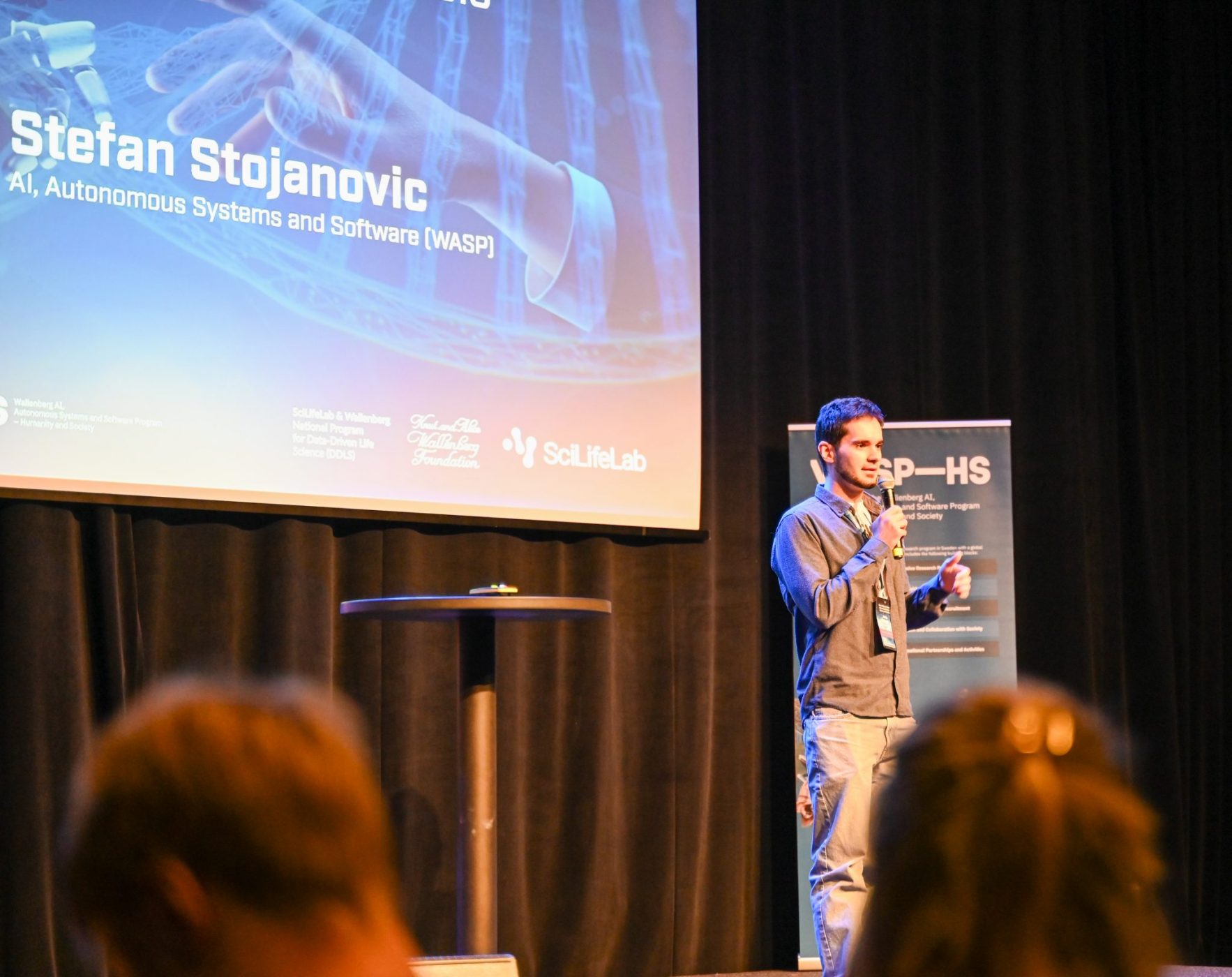
Stefan Stojanovic
Stefan Stojanovic.
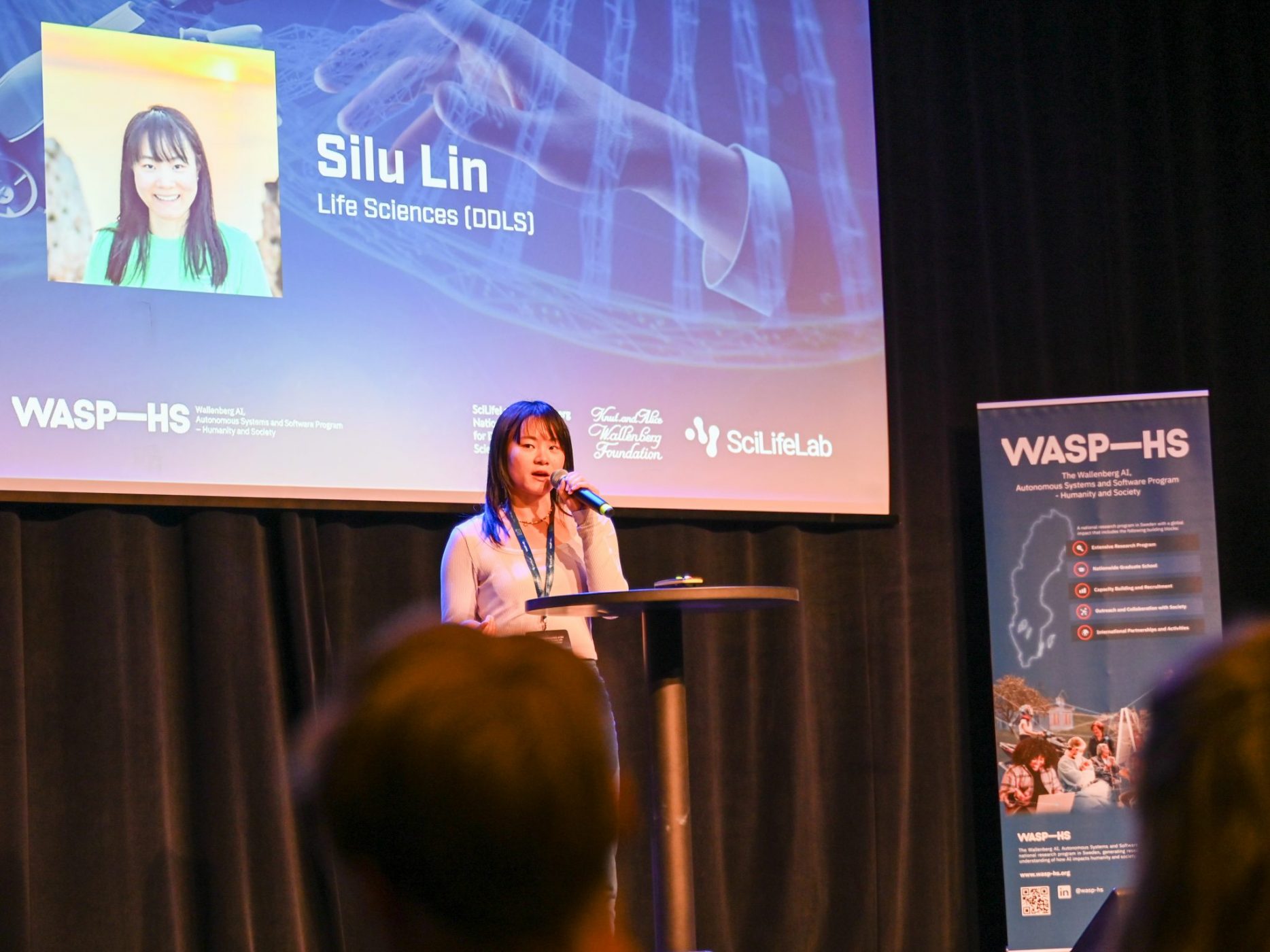
Silu Lin
Silu Lin.
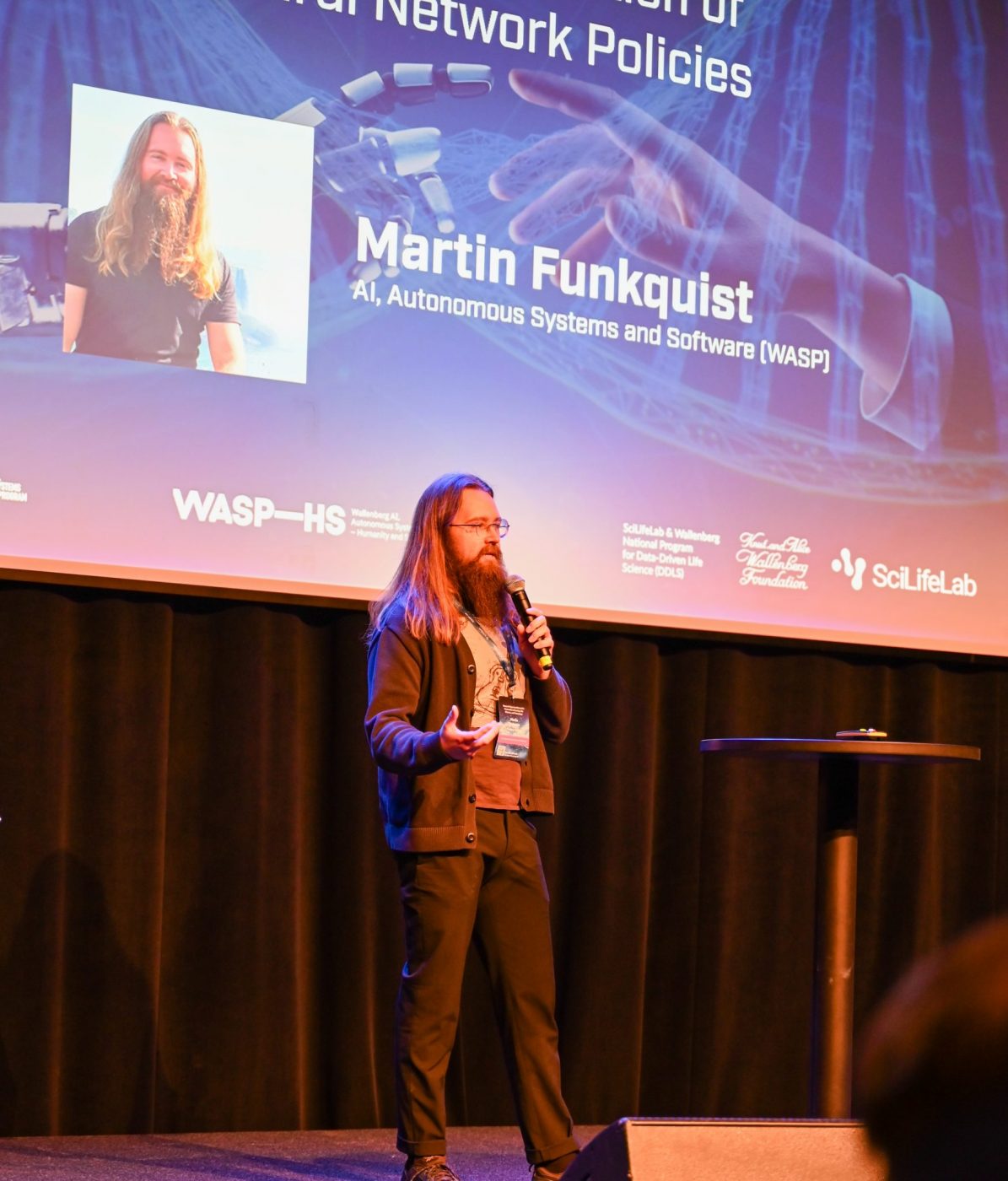
Martin Funkquist.
Martin Funkquist.
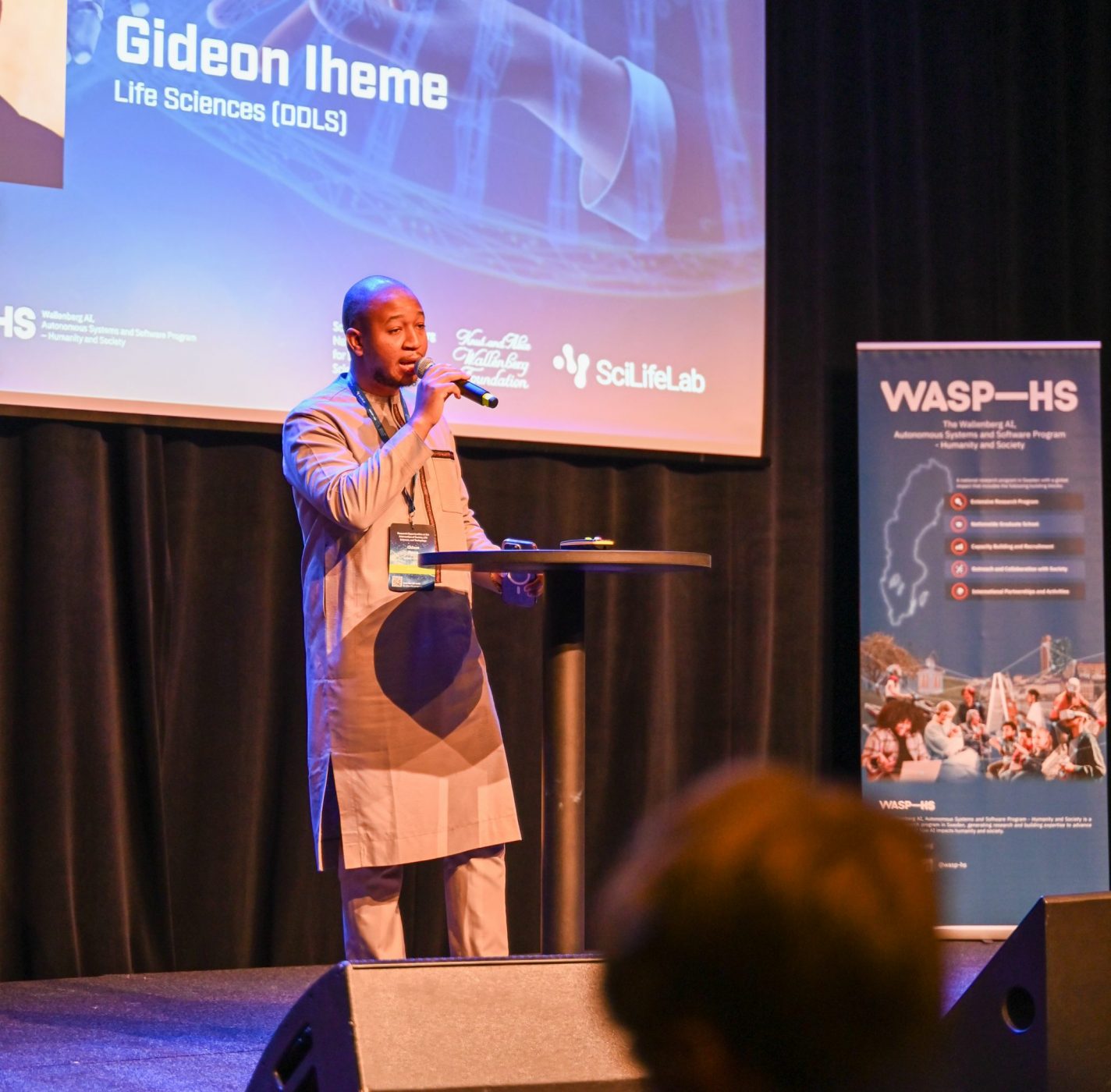
Gideon Iheme.
Gideon Iheme.
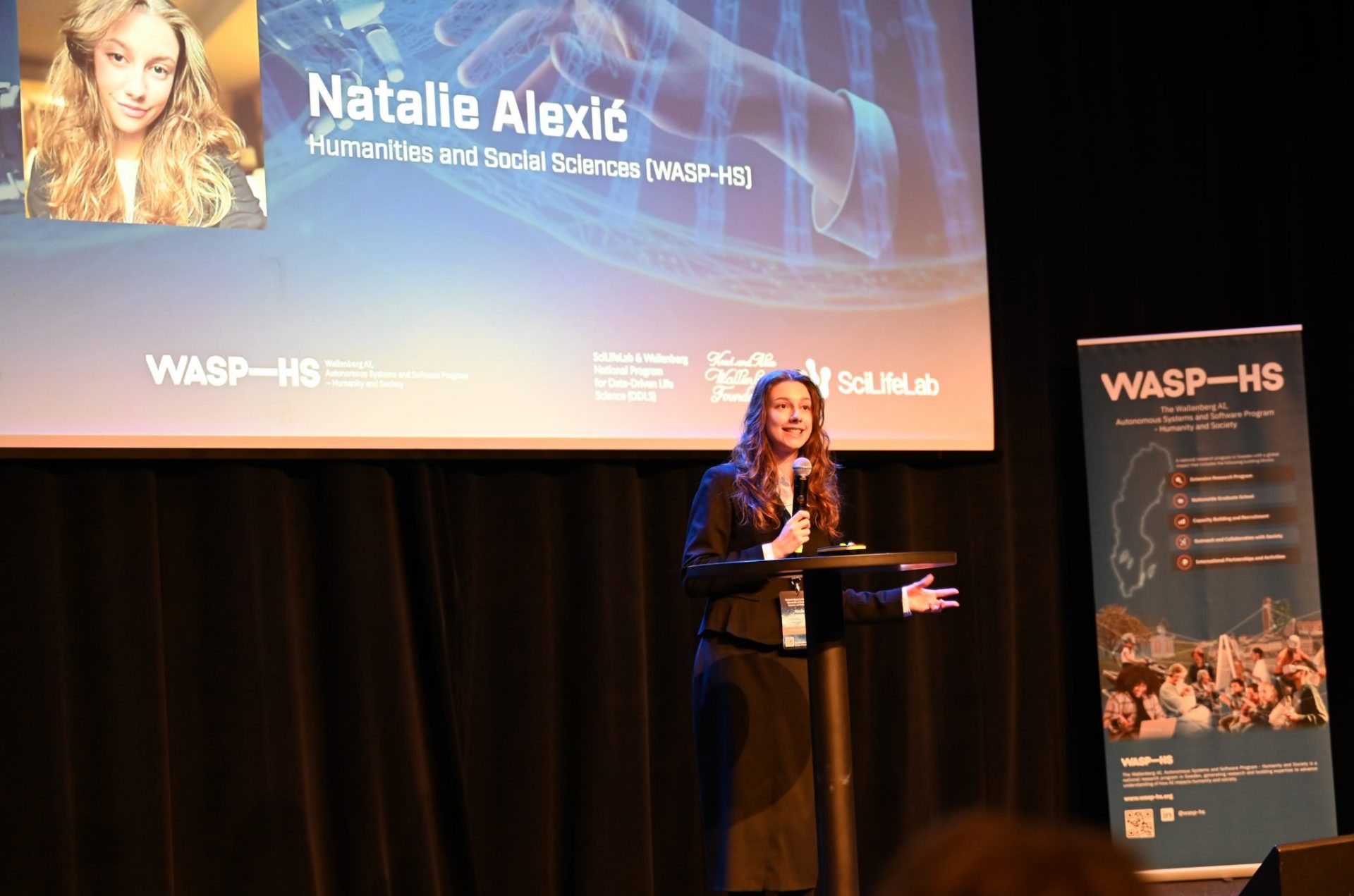
Natalie Alexic.
Natalie Alexic.

Published: May 13th, 2026

[addtoany]

Latest news

We use cookies to personalise content and ads, to provide social media features and to analyse our traffic. We also share information about your use of our site with our social media, advertising and analytics partners. View more
Cookies settings
Accept
Privacy & Cookie policy
Privacy & Cookies policy
Cookie name Active
The WASP website wasp-sweden.org uses cookies. Cookies are small text files that are stored on a visitor’s computer and can be used to follow the visitor’s actions on the website. There are two types of cookie:
  • permanent cookies, which remain on a visitor’s computer for a certain, pre-determined duration,
  • session cookies, which are stored temporarily in the computer memory during the period under which a visitor views the website. Session cookies disappear when the visitor closes the web browser.
Permanent cookies are used to store any personal settings that are used. If you do not want cookies to be used, you can switch them off in the security settings of the web browser. It is also possible to set the security of the web browser such that the computer asks you each time a website wants to store a cookie on your computer. The web browser can also delete previously stored cookies: the help function for the web browser contains more information about this. The Swedish Post and Telecom Authority is the supervisory authority in this field. It provides further information about cookies on its website, www.pts.se.
Save settings
Cookies settings