



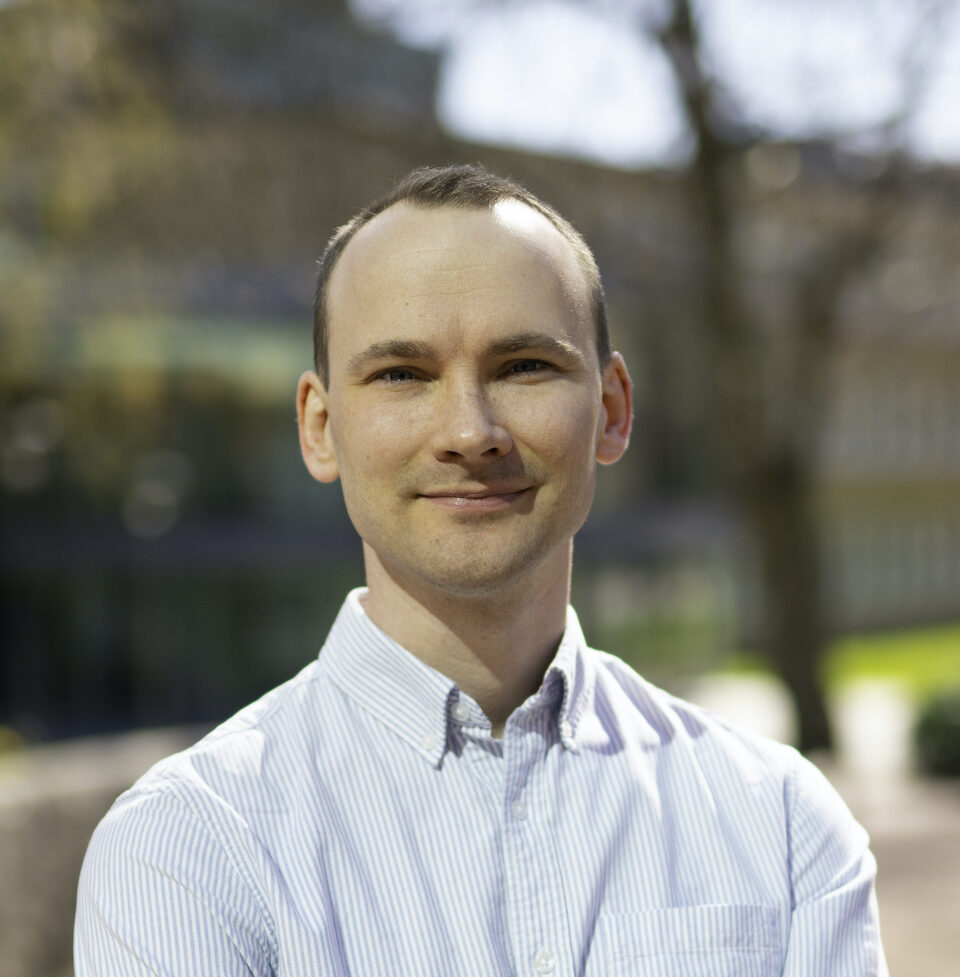
“In healthcare, decisions have consequences. After working on theoretical problems for a long time, I was drawn to problems where the stakes are real,” says WASP Fellow Fredrik Johansson of Chalmers University of Technology.
Johansson leads the Healthy AI Lab, where he and his group tackle one of machine learning’s hardest challenges: designing models that help clinicians choose the right treatment for the right patient. His path to this work—beginning with early research in Sweden, shaped by a formative postdoc at MIT, and strengthened by long-term support from WASP—has defined both his scientific direction and the environment he is building at Chalmers.
MIT and its influence
Johansson’s postdoc at MIT was both challenging and transformative. Johansson says he owes much to the mentorship of Professor David Sontag.
“I am immensely grateful to David for coaching me, introducing me to the right people, and maintaining a very high standard of work,” he says. “I brought this back with me.”
As he was finishing his postdoc at MIT, he began looking for faculty positions in Sweden and learned about the WASP Assistant Professorships.
“It was a fantastic opportunity,” he says. The role provided space not only to launch a new research direction but to structure it with long-term stability. “If I can only pick one milestone that changed my trajectory, it’s the WASP Professorship. It has enabled both academic freedom and meaningful industry collaboration.”
That freedom set the foundation for what would become the Healthy AI Lab.
The signature traits of his time at MIT—rigor, curiosity, and a commitment to grounding algorithms in clinical reality—are visible throughout his work today. When he joined Chalmers in 2019, the department had limited tradition in AI research. Now, with the lab established and the surrounding community strengthened, that picture is different.
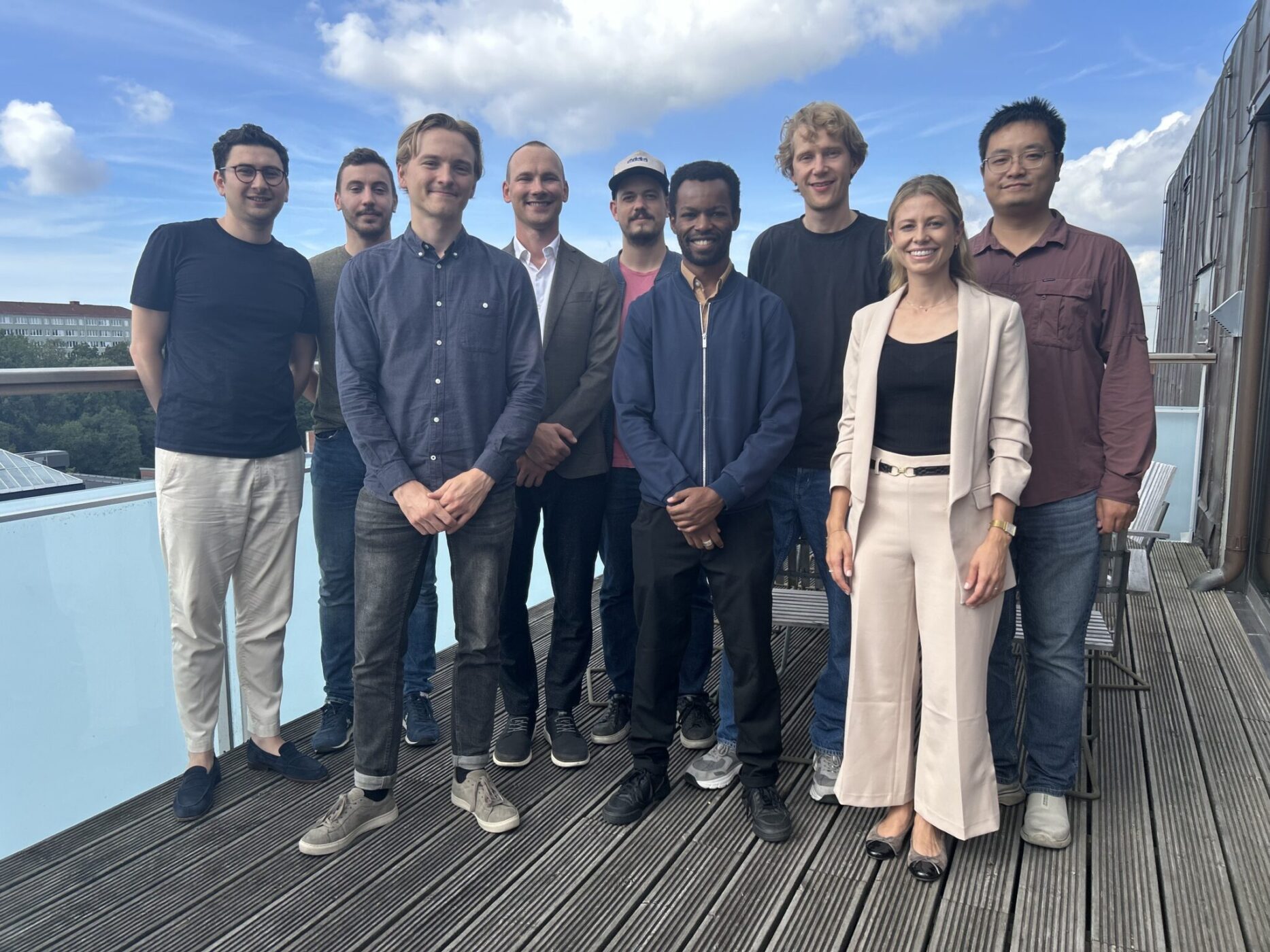
Building the Healthy AI Lab
The Healthy AI Lab focuses on theoretically grounded methods that can directly support clinical decision-making. Johansson is drawn to problems that have a clear medical use-case but remain underexplored from a theoretical standpoint. Much of the lab’s work connects causal inference, time-series modeling, and reinforcement learning with concrete clinical questions: How do we estimate treatment effects when data are messy or incomplete? How can a model learn efficiently from small samples? What does it take to make an algorithm interpretable to clinicians?
Several of the lab’s recent contributions reflect this blend of foundational thinking and practical relevance. Johansson highlights work on interpretable prediction models that work well when some inputs are missing, efficient algorithms for sequentially exploring multiple treatment options, and methods that give guarantees for evaluating new clinical policy. Each project aims to make machine learning methods more aligned with clinical realities rather than idealized versions of them.
Running a research lab, Johansson says, is mostly about people rather than ideas. “At this point, it’s easy for me to come up with research problems,” he says. “But finding the right person for each problem—and the right problem for each person—is the hard part.”
This matching process shapes the lab’s internal culture. Students work on projects that stretch them but also fit their strengths, and Johansson spends considerable time making sure those two things stay aligned.
“When the pairing is right, people do their best work,” he says.
Looking ahead: a shift toward foundation models
Asked about the direction he finds most promising, Johansson points to a major shift across the healthcare AI landscape: the move toward foundation models that integrate multiple modalities of medical data.
“This will lead to fewer single-purpose, small-sample AI models,” he says. “And it will allow greater re-use of information from large datasets.”
For clinicians, that could mean more reliable models that generalize across hospitals and specialties, along with decision-support tools that draw on richer representations of patient histories. Johansson expects these advances to translate into concrete improvements: models that are less brittle, more data-efficient, and better able to handle the nuances of medical practice.
Johansson’s career arc of returning to Sweden, building a new research community, and shaping the next generation of machine learning researchers, is closely aligned with WASP’s long-term vision for Swedish AI research. His work links theory to practice, connects healthcare challenges with machine learning fundamentals, and reinforces the idea that impactful AI requires both mathematical depth and clinical grounding.
“We choose problems that matter clinically,” he says. “And we make sure the methods we design hold up both in theory and in practice.”
In a field where the stakes are high and the questions are complex, that combination is rare—and essential.
Published: December 12th, 2025
[addtoany]