

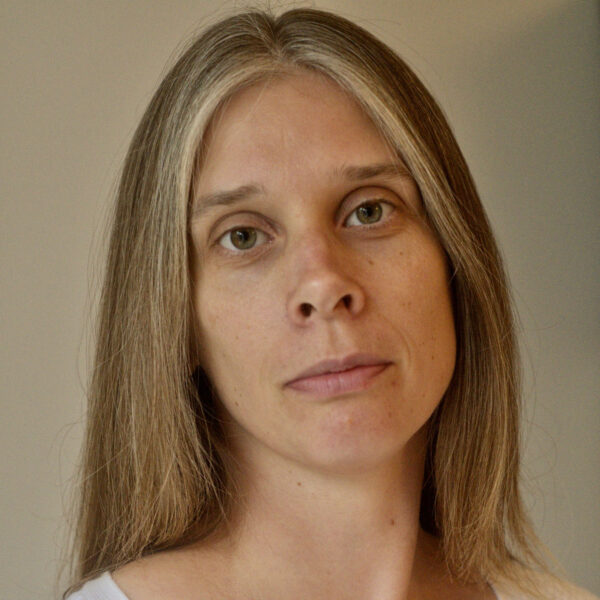
Moa Johansson
Moa Johansson is a WASP affiliated researcher at Chalmers University of Technology who is interested in neuro-symbolic systems. Dr Johansson joined WASP in 2020.
What is your position/role in WASP?
I’m a project leader for a WASP-Aalto collaboration project and I’m also a PhD supervisor for a WASP student at Chalmers. I’m also involved with several projects in the sister-programme, WASP-HS.
Why did you choose to join WASP?
WASP offers a unique opportunity and a great environment for researchers interested in AI, including its societal implications.
What are the benefits you see in WASP?
Excellent funding for research, as well as a great community of researchers.
Briefly describe your research topic.
My background is in symbolic AI, but I am now also working in machine learning, and I am very interested in the combination of the two: neuro-symbolic systems. In terms of applications, I’ve worked on automated reasoning and theorem proving, but also AI for natural language processing, considering texts in political science as well as data from sports. I am also very interested in how AI techniques are applied, what bias comes with data and models, and how it can be mitigated.
We are just about to start a new WASP-Aalto collaboration project about reinforcement learning applied to emergent communication in agents, which I’m very excited about. A pilot study on this topic, conducted by two of our two MSc students is available here: Towards Learning Abstractions via Reinforcement Learning (pdf)
In what way can your research be of importance to our society in the future?
Today there are vast amounts of digital data available, and AI techniques can help us make sense of it, and also help us model human behaviour. However, we need to at the same time make sure it is used sensibly, being aware of bias present in data and models, and ensuring we spread knowledge of how to use AI for the benefit of society.