

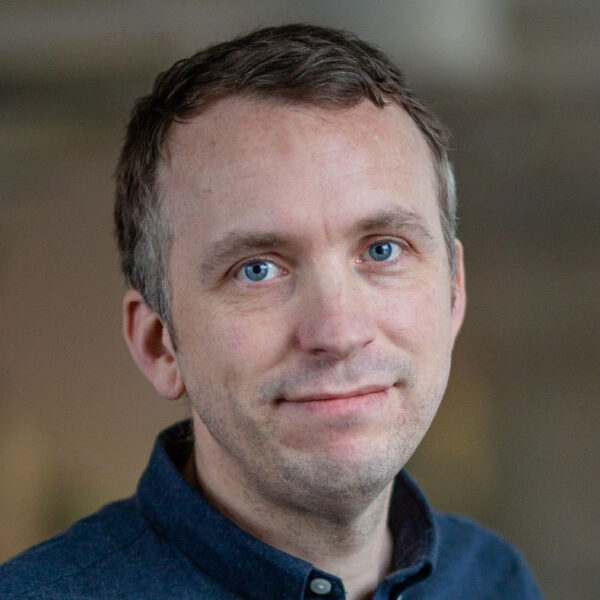
Gabriel Skantze
Meet Gabriel Skantze, a WASP affiliated Professor in Speech Communication and Technology at KTH Royal Institute of Technology who joined WASP in 2017.
What is your position/role in WASP?
PI and academic supervisor for two WASP collaboration projects: Robot Learning of Symbol Grounding in Multiple Contexts through Dialog (with Örebro University), and Representation Learning for Conversational AI (with Chalmers University of Technology).
Why did you choose to join WASP?
WASP provides a great research community, PhD network, and opportunities for funding.
What are the benefits you see in WASP?
WASP brings together researchers from all over Sweden in different areas of AI.
Briefly describe your research topic.
In my research, I develop computational models of conversation, applied to face-to-face human-robot interaction. This involves NLP (Natural Language Processing), as well as speech and multi-modal processing.
We recently got an article accepted in the Journal of Artificial Intelligence Research (JAIR), which presents a model for continual learning of how language is grounded in vision (called CoLLIE). This would allow robots to learn new names for objects based on just a few examples. See article: https://arxiv.org/abs/2111.07993
In what way can your research be of importance to our society in the future?
All the big tech companies now invest heavily in Conversational AI, and the market adoption has been very fast. In the future, I expect us to see social robots in many areas of our society. 8 years ago, I co-founded the company Furhat Robotics, which develops a platform for social robotics, so my research is already being applied to real use cases, such as robots performing job interviews.