



Text: KTH
Giuseppe Belgioioso, researcher at KTH has been awarded the Göran Gustafsson Prize, including a three-year grant of SEK 1.25 million per year. The funding will support his research on how digitalisation and automation can be used to make critical infrastructure systems, such as transport and energy networks, more efficient, reliable and fair.
Belgioioso’s work focuses on developing mathematical models and tools to better understand how complex, interconnected systems behave when many independent actors make decisions simultaneously.

What aspect of your research do you think led this particular grant?
“I believe the award recognizes the combination of mathematical rigor and societal relevance in my research. My work is fundamental in nature, but it is motivated by the practical challenges that arise in modern critical infrastructures systems, such as electrical power grids and transportation networks. “
What challenges does this field face?
“These systems are currently undergoing a profound transformation: they are becoming increasingly digital, interconnected, decentralized, and autonomous. While these trends create major opportunities to improve efficiency and sustainability, they also pose significant challenges in ensuring that such systems remain reliable, fair, and safe to operate. Addressing these challenges requires rigorous methods that can unlock the benefits of automation without compromising safety. I believe my research contributes to this need by bringing solid mathematical foundations from automatic control and optimization to problems of clear societal importance.”
What problem are you trying to solve?
“I would start from a practical example that almost everyone can relate to: road congestion. In a road network, many different ‘stakeholders’ — such as commuters, public transport operators, ride-hailing platforms, etc. — make independent decisions about when to travel, which route to take, or where to park, while sharing the same road infrastructure with limited capacity. Each stakeholder pursues their own objectives, such as saving travel time or reducing costs, but these choices inevitably affect everyone else on the road. The result can be congestion, higher emissions, longer travel times, and unfair outcomes. For example, when certain commuters consistently face longer delays.”
How can these systems be improved?
My research is motivated by this broader question: how can we take advantage of the increasing digitalization and automation in these infrastructures to guide independent decisions to outcomes that are efficient, reliable, and fair at system level? Although transportation networks are an intuitive example, similar challenges arise in other critical infrastructures, such as in electrical power grids.
To address this, I develop new mathematical models and computational tools rooted in optimization and game theory. These tools can help design smart mechanisms such as adaptive tolls, parking incentives, or electric-vehicle charging schemes, so that what is best for each stakeholder individually also benefits the system as a whole.
What potential societal benefits do you see in your research, in the long term?
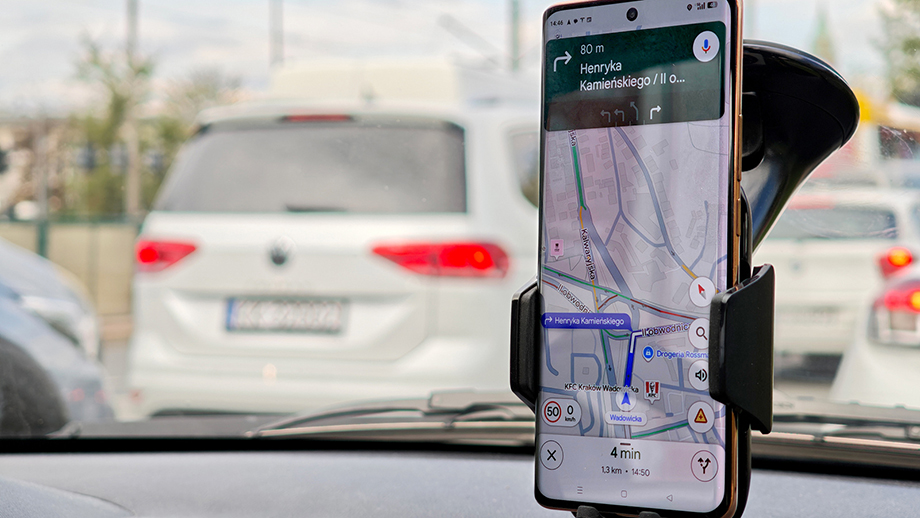
“I hope my research can help develop trustworthy forms of automation and algorithmic decision-making tools that are transparent, reliable, and safe, and ultimately designed to serve society and gain public trust. This is especially important as these technologies are increasingly deployed in critical infrastructures, financial markets, and social networks, where their impact can be far-reaching and the consequences of poor design can be severe. In traffic networks, for example, navigation apps that optimize routes for individual users can unintentionally increase congestion, shift traffic into residential areas, and harm the overall efficiency of the network. In this respect, automatic control and optimization can play a central role, because they provide a solid foundation for trustworthy automation, grounded in mathematical guarantees, and explicitly built around safety, robustness, and reliability.”
You are also a WASP Fellow – what does the WASP environment mean for your research?
“Being part of WASP gives me access to a unique ecosystem of experts from academia and industry working across AI, autonomous systems, as well as more fundamental research on mathematical optimization and automatic control. Since my work sits at the intersection of these areas, this environment is particularly valuable: it exposes me to different perspectives, facilitates collaborations across disciplines, and helps me connect fundamental research with relevant real-world applications. WASP also provides an outstanding support for its affiliates at all career stages, from PhD students and postdocs to early-career faculty like myself.”
The Göran Gustafsson Foundation supports basic research in fields such as physics, mathematics and medicine, with a particular focus on early-career researchers.
Published: March 31st, 2026
[addtoany]